Showing posts sorted by relevance for query coal. Sort by date Show all posts

Saturday, July 27, 2013

Guest Photograph by Gary Anthes


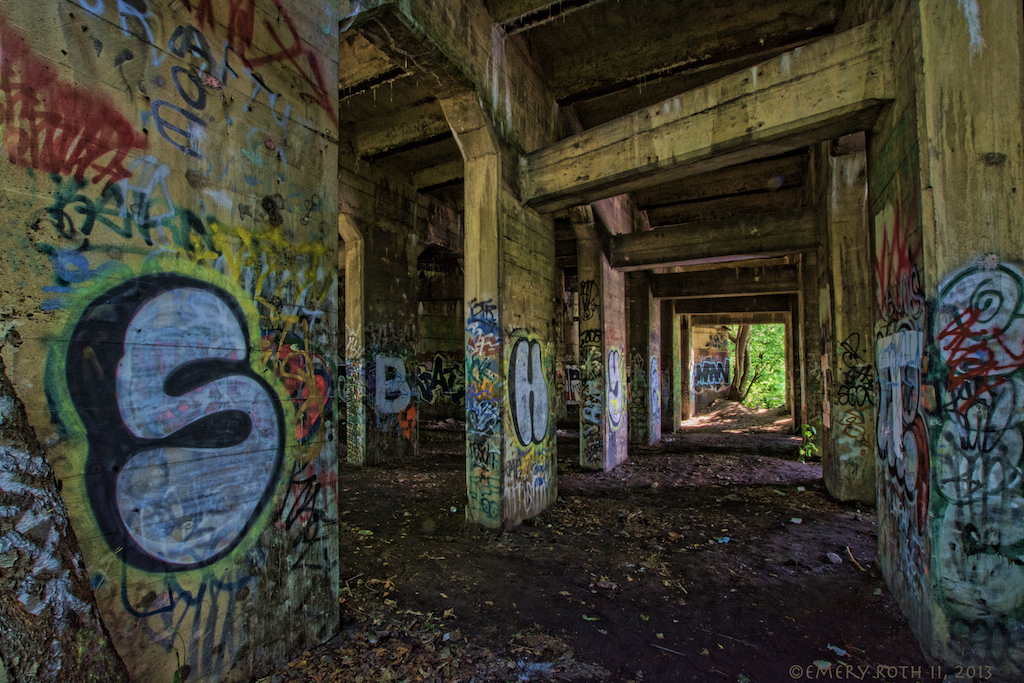
PHOTOGRAPHER'S JOURNAL:  The photograph above was taken by my friend and periodic shooting companion, Gary Anthes.  His picture fills an essential gap in my story of Coal Pier #18 for which I have no photograph of comparable quality.  I thank him for permission to include it here.

There is a courtyard, town square, plaza that falls between the second and last sections of Coal Pier #18. It is a community space where you can sometimes meet and talk with other visitors.  As architectural space it adds unexpected openness, a place where one can see across the pier unobstructed.  
The original purpose of the pier is impossible to understand without understanding the six-story high dinosaur that once stood in the public square. Track ends on one side, continues on the other to the end of the pier where the ramps grow slender at the scorpion's tail, and the track's path is unclear.


Railroad "dumpers," were a late 19th century, Rube Goldberg invention perfected through the 20th century rise of industrial America.  They were giant structures designed to move goods, especially coal, ever faster to feed the fires of growing consumption. By 1915 a single state-of-the-art dumper could dump forty, 100-ton coal cars in an hour and automatically distribute the coal in the hold of a waiting cargo ship. Dump is exactly what they did, lifting the whole coal car 
and tipping it sideways into chutes to distribute the coal evenly into the ship's hold below.  My understanding is that this dumper was designed so that while a loaded car was pulled up one ramp to the dumper, an empty car on the way down served as counterweight. The scorpion tail at the end was where the upbound car would switch tracks to the downward bound ramp.  The tail may have given a bit of kick to its roll back.  

On our recent visit, I was already heading back from photographing at the end of the pier, had crossed the public square and had my mind set on a few possible shots I'd seen earlier.  I was surprised to see eight or nine young men walking on top of the coal ramp. How did they get up there?  My mind was focused on what I wanted to shoot, but I shouted back to Gary to call his attention to the boys who he had also just spotted.  He was in the plaza and caught the shot when they reached the end of the track.  The red, white and blue graffiti is one of the best on the pier, but it would always be a disappointment  to have it without the boys who knew the secret of how to get up there.  This was their home turf.

They didn't stay long, and I had barely set my tripod up at the start of the pier when I saw the line of them on their way back.  I watched to see how they dismounted.  Near the beginning of the ramp a tree grew close to the concrete abutment , and large, steel spikes, an inch on a side, had been driven like a spiral stair down the tree trunk.  I watched as each of the boys grabbed the tree, swung out and climbed down, some with the graceful care of tigers, the last with an awkward leap and a four-point thud. There were all shades between. This was not a group bound to be urban freerunners.  Do they know of McMyler dumpers and the story of their jungle gym playground? How deeply do cultural discontinuities divide us?  How quickly the past looks ancient!

For inspiration:  While researching McMyler dumpers, I came across this video of a model of one that operated in New Jersey:  http://www.youtube.com/watch?v=XLbqnw2bKeI

You can see more of Gary's photographs of Coal Pier #18 here.


Wednesday, July 17, 2013

Cola Pier #18


PHOTOGRAPHER'S JOURNAL:  Coal Pier 18 in Philadelphia was once a key transfer point where rail cars loaded with coal from the mines were pulled up a steep ramp, picked up bodily and dumped into waiting barges which brought the coal to world markets. It was a hub of activity. 

The only way to reach it now is along a cinder and rubble trail through a trash-filled forest of willows and brash brush. It is the stuff that roots and widens crevices anywhere it can find a grip. The trail gets darker and then before you know it, you're under the ramp. 

Coal Pier 18 is a part of the furious clammerings of a great city, cut off only by an unbroken rumble from six, sometimes eight lanes of traffic and acres of chain link fence. Regulars know its ways.

There are other abandoned coal piers in what was once the Richmond Yards, but Coal Pier 18 stands out because of the steep concrete ramp that supports the remnants of two tracks and extends like a scorpions tail 500 feet into the Delaware River.  It is a four-story high monument to the great and grimy in our fading industrial heritage, and the shadowy spaces beneath it invite exploration.  

Both times I was there it was spring, and the tangle of leaves and branches that surround the pier and the ramp felt a bit like the Forest of Arden inviting exploration into a forbidding maze of passages and spaces beneath the ramp.


Saturday, July 20, 2013

Urban Anagrams


PHOTOGRAPHER'S JOURNAL:  My second encounter with Coal Pier #18 came on the way home from the silk mill. Two years earlier the way in to the pier had been hard to find, but now new highways were under construction along the waterfront, and for awhile we weren't sure if the pier and ramp were even still there.  We took a left into a road that looked like it would get us closer to the water. A policeman parked like a sentry stood guard.  I took a deep breath as we asked about the pier.  At the exact same moment, my friend and I recognized the spot in spite of its recent transformation. The cinder road to the pier was at the back of this lot, almost within sight, though the sentry said he'd never heard of Coal Pier 18. All our hearts were thumping a bit, but he never stopped us as we continued to the back of the lot where the trail we knew began.  

The road was mostly as I remembered it, lined on one side by the willow forest, thick as thatch, too thick to enter except at several points where small trails emerged like scoops. They were the work of ATV's. A pedestrian in there would have no chance if one came speeding by. I imagine few cities in America offer such an extensive network of un-patroled byways for the daredevil hellraising of urban ATV enthusiasts as the yards around Coal Pier #18.  The other side of the path had been brutally cleared; it was a gaping wasteland of hardening mud to the point where jungle was still unmolested.  

The first view of Coal Pier  #18 is as a cleft through a high dirt embankment. Two concrete retaining walls hold back the earth so the cinder path can continue at grade through this canyon. In fact, standing there, we are already within the great ruin of the pier. The concrete retaining walls on either side once supported the heavy-gauge tracks that carried coal trains over our heads and along the pier's ramp. The cinder path itself must be an old rail bed crossing beneath. 

A few steps back, a narrow path beside the cleft leads down to cavernous spaces beneath the piers structure.  From here it is clear that ATV racers are not alone in this people's park.


Monday, July 22, 2013

Galleries


PHOTOGRAPHER'S JOURNAL: In the middle of Coal Pier #18, beyond the long arcades with the black track still climbing steadily above, the pavilion becomes a cluster of chambers and cells. When enclosed, these were shops where machinists kept the coal port humming smoothly, moving coal through the harbor to power steadily increasing demand for kilowatt hours that gave the morning air a chalky taste.  Now the shops are sorry boutiques, galleries for a grim art of outrage, cave paintings for the new millennium.


Sunday, July 21, 2013

Arcade


PHOTOGRAPHER'S JOURNAL:  The first time I visited Coal Pier #18 was in early morning. This time we arrived on a beautiful Sunday afternoon, and no-man's land had become a people's park.  Men with tackle boxes and poles, whole families, too, with picnic baskets, and little children climbed over the roots of trees to swim in the river. The coal ramp itself had become a pavilion for the ever-evolving art of the people, though it was often hard to distinguish gang art from dilettante dabblers and paintball casualties.  Some men were fishing at the end of the dock, and I asked if I could take their pictures, but they waved me off without a word of English.

In my own mind Coal Pier #18 divides into three sections and a courtyard.  The great public spaces of the previous two images come first where the ramp takes off. They end in 4 arcades that are stopped variously by walls and divisions until they become a bit of a maze, and one forgets the noise of the city.


Tuesday, November 5, 2013

Frostburg Noir


PHOTOGRAPHER'S JOURNAL: From the balconies on the third and fourth floors of the Hotel Gunter there's a good view up and down Frostburg's Main Street. It was the National Road over which prisoners were frequently transported, and at the back of the men's room in the basement of the hotel, there are still two prison cells where prisoners were locked up overnight while accompanying marshals slept upstairs. 

The Hotel Gunter opened originally in 1897 as the Hotel Gladstone, a place for businessmen to stop and get big city service from bell hops in brown uniforms. It was the biggest place in town with 100 rooms. The grandeur and lace of its lobby lent an air of super-respectability to business conducted there; shoeshine boys waited and barbers patiently stropped gleaming razors, should a businessman need the civilizing influence of hot towels, a shave and a bit of tart lotion before displaying wears in the hotel's "sample rooms."  

When the business failed and was sold in 1903, William Gunter, the new owner, made the bar room sing steamily with mahogany and marble and brass, and he added a tin sealing painted pea-green and a room in the basement for cock-fighting. During prohibition, they say, the noise and commotion at the front of the building was just enough distraction that liquor could be brought in safely at the back. In 1925 Gladstone officially became Gunter.

The passageways that wind through the basement are a trip through time. They are a museum of culture and technology of the industrial age. There's everything from a washing machine to a stuffed bear. The winding passages are crossed by rails that carried cartloads of coal to heat the hotel's 100 rooms, and around a bend and down a ramp one finds the coal cart looking as if it were heading into a mine shaft. Beside it are miner's lanterns, picks and other tools. As I recall, the cock fighting ring was nearby.

The stair flows from the second floor into the center of the lobby of the fully restored Failinger's Hotel Gunter (http://www.failingershotelgunter.com/). It is usually decked in flowers and sometimes in garlands, and it spirals past high-back, cushioned chairs and lace and an organ and down into the basement passages, and as I was spun, I sometimes forgot when I was from, but each time I returned to my room a brass plaque on the door helped me find my own century. It told me that Roy Clark had slept there on Aug. 4, 1990; it made me feel as if I ought to look under the bed, but the room and hotel were a pleasure to stay in and a trip in themselves whatever century they were in.


Saturday, November 29, 2014

Lofty


PHOTOGRAPHER’S JOURNAL: Among things to notice while dallying in the past is the care taken to utilize height. Bank barns, railroad loading structures, steamship docks all are built to use the economics of height. Earlier I posted photographs of Coal Pier 18, a multi-acre structure at a key coal transfer point to turn train-loads to barges-full. The recently photographed American Brass monorail is another example.

Physics defines Work as the amount of the force applied to move a mass across a distance. A falling mass was work saved or conserved; it was money banked. How did gasoline engines and powerful electric motors, which made energy always the click of a switch away, change the economics of structures like this? 

Designed by someone and carefully built by hand, who was he? Was this a unique construction or were these plans used widely?

We passed this along the road after leaving Pennhurst. I’m not even certain what it held. I recall we walked around it, figured out how it worked, saw where the rail line ran, but at seven months’ remove, I can’t recall what the shadowed side looked like.  I wish I had a photo!

It's hard for communities along the endless corridors of strip malls and super highways to reclaim a distinct identity. How much is it worth to have structures like this stabilized and preserved for future generations to wonder at as they try to understand a world that was, to which they are the heirs? Would it help if we called this sculpture?


Sunday, May 22, 2011

Factory Stair, Torrington


PHOTOGRAPHER'S JOURNAL: The 1845 potato famine in Ireland coincided with the building of the railroad up the Naugatuck Valley, and so it was hungry and mostly illiterate, unskilled men with brogues who leveled the roadbed and laid the track along the river all the way to Winsted. Completed in 1848, it opened the valley to industry and carried the products of those industries to Bridgeport and the world. Trains brought coal, copper, zinc, tin, jobs and cheap labor and took away buttons and kettles, pins and pipes, clips and clocks. Brass was the plastic of its time; uses were burgeoning, and the Naugatuck Valley was competing with Birmingham, England, to be the brass-making center of the world.

How can I touch those struggles in the crumbling brick and rusting ducts that remain of this industrial empire? Where can my camera catch reflections of the imaginations fired by new engineering challenges and devising machines, procedures and new metallurgy to make things faster, better, cheaper? Where do the halls still echo the machinists' practiced craft and confidence? Where does the floor still creak from the daily passage of unskilled, buggy-luggers and grunts working 12-hour days and six day weeks or sometimes not working at all? Can photographs get near any of these?

Output at the mills fluctuated but industry boomed during the Civil War, and after the war the rest of us came and the Valley began to fill up. The trains brought Italians, and Lithuanians and Russians along with the coal and the copper and the tin. Like the Irish, many of us were illiterate and unskilled. In addition, we spoke no English.

Mill owners built villages to house us and systems to provide water and food, to keep the peace, and to manage town affairs. It was a massive undertaking to create civic institutions that would support the growing population. They hired prestigious designers like Cass Gilbert, McKim, Meade and White, Olmstead Bros. to design civic buildings and public spaces that would reflect the confidence of the region and provide a foundation of hallowed permanence. The policemen and firemen and the apprentices on the way up were mostly Irish, but we all formed clubs, gangs, factions and unions, and we were encouraged to back political candidates and vote. Banding in groups of our own kind, we struggled over identity, flexed muscle and sometimes rumbled.

Much of what the trains brought was pumped out into the Naugatuck or up into the air. It settled into everything, made the river smell and the air taste bad, and in Waterbury and Naugatuck people with money lived upwind, west of its stench. In Derby, whenever we passed the Hull Dye Works our children guessed at the river's color that day, but we worked hard and raised families as best we could. Those who worked at the pickle tubs got metal fume fever and called it spelters' shakes, and rollers lost arms, but workers with experience argued over the best cures - whether oatmeal or hot cider and pepper cured Spelters' Shakes better and warned us about how much of our arm we'd lose on each machine.

During the Great War there were plenty of jobs, 24 hours a day, and after the war there were strikes and violence in the Valley and in 1920 the National Guard was called in. There was bloodshed, and some were called subversives, but the mills kept growing, and some of us became foremen.

In the Smithsonian Museum in Washington, D.C. are prototype models of many of the machines that operated in these factories. There are thousands of them. They look like sophisticated toys, but they actually run. What's left today in these hollow spaces where the actual machines ran? What memories echo here? One must listen closely to hear the past behind the sound of the river and the wind.

Saturday, November 2, 2013

Dan's Rock


PHOTOGRAPHER'S JOURNAL: We arrived in Frostburg, Maryland, late Friday afternoon after a full day of driving. Of those so far gathered, I was the only one interested in waking early, and I was out before seven prowling for photographs. I saw the full moon set and drove the road past Lonaconing, looking for side roads to explore as the sun rose. I  followed many narrow valleys where houses clung to steep slopes and the banks of rushing streams. Some were immobilized mobile homes and some had turnings and gingerbread that suggested another age and more steady times. Few had seen a coat of paint recently. The roads wound into the valleys like mine shafts into veins of coal, and all eventually gave out without ever climbing, though one led me to a hilltop cemetery just as the last hope of sunlight was being muffled under clouds. I must have passed over a hundred small bridges as roads crossed and recrossed rushing brooks. Then, on the way home, I saw a sign: "To Dan's Rock Overlook." I had just enough time, perhaps, before I was to meet my friends at 10.

The road led unpromisingly toward a cluster of homes before pointing me left so that by the time I moved beyond the homes I wasn't sure if I was still on the road to Dan's Rock Overlook, but the road kept climbing.  I passed houses and scrub land and some sort of large tank, and the road went on much further than I expected without a sign of getting ragged, and it kept climbing, and it was still paved and finally reached a small parking area. To one side were thin woods and a valley beyond.  On the other a large outcropping of rock blocked my view. The rock had been almost entirely covered with people's names and declarations of young love in bright colors sprayed from aerosol cans. The outcrop was topped with numerous telecommunications towers, and I guessed I was nearly on top of something. I later counted sixteen towers in all. Stairs had been cut into the rock outcropping. I remembered, this was a region where men were used to cutting into rock, but the steps were crudely cut, strictly an amateur affair. 

The steps led uncomfortably up the rocks to a metal structure, metal stairs and a bridge that eventually surmounted the rock and led to two lookout platforms and the scene recorded in my image. The name, "Dan's Rock," had been welded into the structure. I'd finally gotten out of the valley. Messages continued covering every rock surface  even at the top, and it was clear that youths squirming in their immortality had risked everything to leave unrecognizable dabs of paint in dangerously inaccessible locations.

I returned to town and my friends, and after breakfast we all visited Dan's Rock for our morning shoot.  We were due at the silk mill at one.


Wednesday, March 15, 2017

Transept


Half way down the “nave” of the Farrel Foundry is the transept. That is where the metal was poured into molds made of sand. Workers associated in any way with the Farrel foundry usually have stories to tell. Grime, danger, and heroism seem to be widely remembered, and there is a special regard given those who poured the metal. Founders, casters and molders are the priesthood of the metals and machine industries. Once theywere alchemists whose coveted secrets imparted the spirit to the metal and on whose crystal magic all future success depended. 

In 1731 quality iron ore was discovered in Salisbury, CT, and by the mid-1740s they were producing pig iron in East Canaan, Salisbury, Sharon and Kent, and the Northwest HIlls had become the center of America's iron industry. By the time of the Revolution there was hardly a community in the region that had the power of a good stream that did not also have a puddling furnace for refining the impurities from the pig iron produced in blast furnaces. Local farmers forged the purified wrought iron into the tools they needed, and the region developed an expertise in metal working. But forging and founding were different arts, and the most precious secrets belonged to those who poured the metal.

With ores and metals of uncertain purity and the fluctuating heat of charcoal, coke or, later, coal, they learned to make fires that would sustain the high heat required and relied on their senses, knew by the sound or smell, when it was time to add ingredients or mix or pour. The region developed an experimental curiosity about making and working metal that grew to expertise and drew the metals industries to the Naugatuck Valley and to Connecticut.

I’ve been told that existing journals of Barnum & Richardson, with furnaces in East Canaan and Salisbury show deliveries of iron to the Farrel foundry right up through WWI and deliveries still being made as late as 1925, two years after the smelting operations had shut down. The last delivery of Connecticut iron came in 1941, exclusively made up of old pieces of salamanders probably for a widening Second World War. The superintendent who kept those journals was reportedly, "proud that ‘Salisbury' iron had served the country from the Revolution through WWII. 

The people of the Lower Valley are also quick to talk about Farrel’s past importance to the nation’s defenses, and I’ve been told the foundry was hidden in camouflage during WWII. Pigs of iron, whatever the source, were delivered here, to the transept, where the metal was poured.


Friday, November 2, 2012

Watercolors


PHOTOGRAPHER'S JOURNAL:  Walking along the towpath of the old Chesapeake and Ohio Canal, it was hard to feel any of the energy that once surged along this artery. It was as still as a fossil, a byway of 19th century commerce, bushels of tobacco and cotton, barges of iron and coal preserved in a water-filled imprint, and it seemed to make clear how a society is a living organism and how barges on a canal can flow in packets over computer networks that catapult at light-speed through satellites in orbit around the earth. The web of communities and services that grew around the canal had all either fallen away or morphed into something new with an address in cyberspace, and the canal was left, a fit place to meditate on the stillness through which the sun was reflecting a clear, autumn afternoon.


Thursday, July 25, 2013

Picnic by the Coal Pier: White Hot


PHOTOGRAPHER'S JOURNAL:  To some of us this is an assault, its transience unsettling. For others, it is merely the natural expression of the chaos of our time.  As art, it challenges the art of collectable commodities out of which we have built our culture.  As political statement, it challenges law and exalts chaos.  Scrawled in endless repetition on our buildings and on our buses and subways it is an irritant and a challenge meant to offend. Here, beyond the chain link fence in the people's park, for good and or ill, it is the law. 


Tuesday, July 30, 2013

Scorpion Garden #2


T.S. Eliot: The world revolves like ancient women gathering fuel in vacant lots.


PHOTOGRAPHER'S JOURNAL:  

What Need

to find the nexus 
between this sprite 
and the weight of coal 
that has been borne here 
like 
a flowing river 
from the heart of mother earth 
to fires 
remaking 
everything


Tuesday, July 23, 2013

Picnic by the Coal Pier: PRAK


PHOTOGRAPHER'S JOURNAL: What could future archeologists understand of the warning implicit in this pictography?  How many of us Sunday visitors can tell the war rooms from the shrines?   


Thursday, January 15, 2015

Like Clockwork


PHOTOGRAPHER’S JOURNAL: Our nineteenth century legacy: Where there’s a river, there’s usually a rail, and once they were lined with factories. Several days ago the view was the river; hop over the Seth Thomas / Plume & Atwood Yard, and there’s the rail. It all says nineteenth century, and it feels filled with purpose and momentum. Time is a railroad train carrying us down the track to unknown adventures never dreamed by humankind. 

This was the place that pioneered time, and here is the rail that quickened it, and integral to every rail line was the telegraph that synchronized time and made information instantaneous just in time for the Civil War. The North had the network and proved the superiority of technology over slavery. We have yet to prove the superiority of humanity over technology.

Whenever these buildings were built, it was well after the Civil War. Thanks to Mark at the Torrington Historical Society for maps that show the site at several dates. The 1874 tax map shows an arrangement of buildings very much like what’s left of the yard - also a mill and a coal yard here, along the rail. 

I used to visit often. It was a melancholy, quiet place for photographing noir that felt timeless before the buildings fell. 


Friday, November 29, 2013

September, 1957


PHOTOGRAPHER'S JOURNAL:  Klotz Throwing Mill closed by a strike officially on Jul 7 1957, though the calendar in the photograph says September. The sweater has hung so long it comes away in the shape of the chair. And the silken thread produced here winds backward through Gilded Age parlors and underthings to New York silk barons who sited their mills here where coal, transportation and labor were all cheap, and the mills were like schoolrooms where the wives and daughters of miners worked in silence to the clattering machines, and when it was time for break, the lights were turned off to save electricity.

for a complete description read Rebecca Trussel's excellent article, "Opening Tut's Tomb."


Wednesday, March 27, 2019

A Walk Thru Faust's Garden


Next Slide-Talk:
April 1, 2019 (no kidding) at 7:00 PM
Work in Progress: On Photographing Brazen Grit

Granby Camera Club
meeting in the Granby Senior Center, Community Room
15 North Granby Road, Granby, CT


PHOTOGRAPHER’S JOURNAL: It wasn’t exactly magnetism that drew the iron blast furnaces to the ore. When the forests were gone in Northwestern CT, and one could look across the hillsides, the ground shifted and iron ore was attracted to coal. Iron made from coke had qualities industrial manufacturers wanted, while charcoal iron lingered for those who cherished quality wrought iron, a niche market. The forests of the Berkshire Hills had been burned; in the West there were mountains of Coke yet to plunder.

We’ve arrived at what might be considered ground zero of American industrial enterprise. In the three-ring-circus of the industrial revolution, the feature acts were always energy transportation, and iron. A firm grip on any one of the three was a firm grip on the throttle. The names click into position like the reels of a slot machine: Rockefeller, Ford, Carnegie, and standing behind them, at the cashiers’ window, J..P. Morgan, the only one born to wealth. 

To travel from the 1847 Beckley Blast Furnace in East Canaan, CT, with its bucolic tombstone remains (recently posted), to wha’s left of Andrew Carnegie’s Carrie Furnaces, across the river from the infamous Homestead Works in PA, requires a half century leap. How many miles of rail had been laid? How many locomotives sent steaming over the tracks? And how many new steam ships were bringing newcomers, as the canal was being cut across the isthmus of Panama to reach Pacific waters from the Atlantic coast?  And how many tall structures scraped the sky, made first of iron and soon of steel in New York and Chicago, before the Great War came and we made more guns and tanks? And after the War we took to the roads in oily vehicles of iron and steel. 

Welcome to Faust’s Garden. Rockefeller, Ford, Carnegie and Morgan left huge legacies, both for good and for ill that we still can’t reckon.