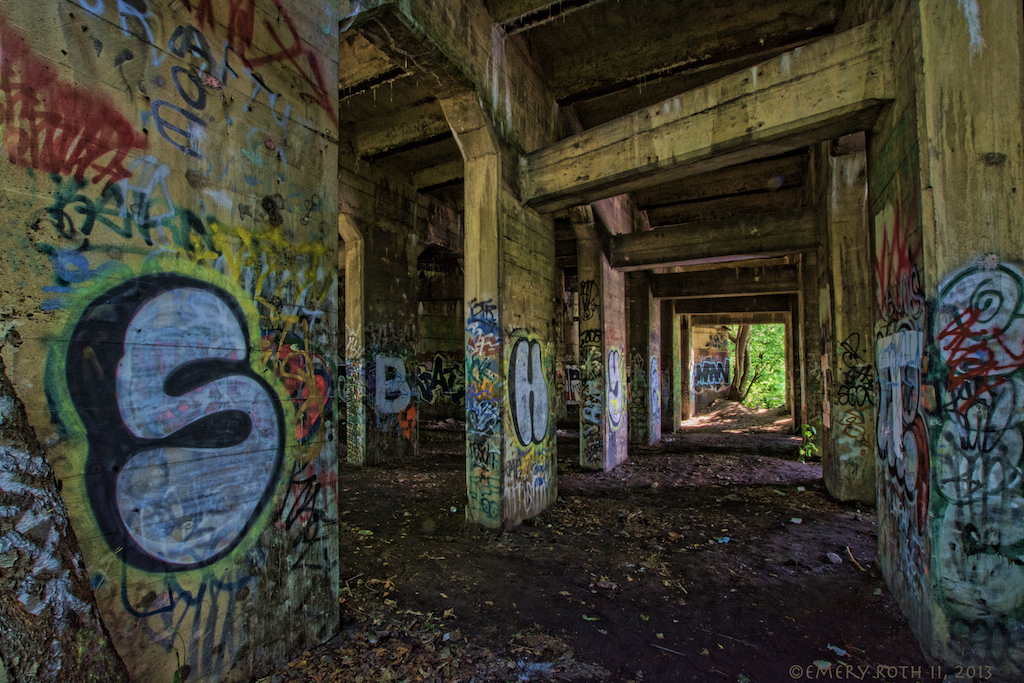
Monday, September 23, 2013

A Moose with a Wandering Eye (or "The corn was as high as a...")


PHOTOGRAPHER'S JOURNAL: I thought at first it was an accident, cars stopped both sides of the road, but down below the road, at the back of a field he stood, as if amused by the crowd that had gathered. I'd like to think he was waiting for me, the guy with the tripod-mounted Nikon and 300mm telephoto lens, and I suppose it's possible that even the moose community has to put out a press statement, stake their claim to the area around the Shepaug Reservoirs, deliver their bit of PR. He was certainly a handsome spokesmoose.

I had just finished a full day of shooting, and in my mind I had put away my gear, even though the gear was in reality spread across the back seat. The inevitable decision: to stop or not to stop? I passed the crowd then rushed to park, grabbed my stuff, found a spot to set up; aim, focus, shoot, while the moose waited and seemed to be looking calmly from face to face among the crowd that had gathered. It was not entirely clear who was the more beguiled, the moose or us.  He allowed me just enough time to get off three shots before he began slowly to walk away, frequently turning back to check the little pink faces of the natives on the hill behind him

The area around the Shepaug Reservoirs is a large natural preserve. There are two or three miles of forest to cross between the corn field and the lower reservoir, and the reservoirs are similarly buffered on all sides. There is room there for many moose and much else, but it is on the bleeding edge of sprawl and whenever there are such sitings, I think about how small that area is, and I feel the constant march of lawns closing in. Each year there are more small driveways burrowing into what was previously unbroken forest, cutting a nearly invisible tunnel ending in a clearing, house and lawn.  We bore our way into the forest as surely as any beetle.

Alas, so poor am I as a news reporter and naturalist that I had to check with my daughter to be sure it was, in fact, a moose I had photographed. The truth is that he was probably lured out of his refuge, not to have his picture taken but by the ripe corn which will soon be harvested.  I'm told this is also mating season when the bulls, normally solitary, go in search of mates. 


Sunday, September 22, 2013

Grass-Fed


PHOTOGRAPHER'S JOURNAL:  Follow the road north from Winchell Mountain, and you'll come to Ancramdale, the center of an agricultural community where farmers produce everything from milk and cheese to Alpaca yarn to aged meat and whiskey. I've been photographing farms and fields in the area since 2009, but yesterday Ancramdale farmers held a kind of "open house," and Jane and I went from farm to farm to learn about the area. This is Fox Hill Farm where the Lampman family have been farming since the 1880s. There was an established farm here before the Civil War. Today Fox Hill Farm raises and sells grass-fed beef and beef products. I took this photo several years ago, and I keep trying to get back to photograph here in the afternoon as the herd is brought across the street, into these fields for their fresh grass dinner.


Thursday, September 19, 2013

Blue Yonder


PHOTOGRAPHER'S JOURNAL:  The clouds opened like the loosening of a knot, but the birds had already been singing.


Wednesday, September 18, 2013

Tuesday, September 17, 2013

Hudson River Schooled


PHOTOGRAPHER'S JOURNAL:  Climb from the Harlem/Route 22 Valley into the hills along its western side, and you'll find mostly horse country until you get up north near Winchell Mountain. It's the highest spot around, a broad spread of corn fields and grazing land for the dairy herds of Pleasant View Farm. Whether or not it is quintessential, this image is an unexceptional glimpse of quiet countryside; unexceptional except that readers of this blog who pass through the area will be trying to recall exactly where it is, and others will know it instantly. It is a place where you can often see people stop to take in the view or just let off steam. One might even put a dot on maps at this very spot and mark it, "Pleasant View."

Before I started photographing in this area I occasionally scorned the work of the Hudson River School painters, but the quiet grandeur they found here is irresistible.  From this gap in the hills where the road passes near the broad top of the mountain, we can see across the Hudson Hills and past the great river to the Catskill Mountains whose crests are 30 miles away and the better part of a two hour, hilly drive. It is easy to forget that we are looking out across a scurrying suburbia of traffic lights, honking horns, and trips to the dentist.  There, along the river's edge especially, the traffic snarls along Route 9 can be maddening.

Sometimes there are cows in this field. Though they might add to the composition, a look at the sky and you ought to realize that any cows in the field now, will be lying down beneath the trees, on the hill to my right, waiting for the weather to change and radiating karmic energy with, I'm certain, no notion of scurrying suburbia.


Monday, September 16, 2013

The End of Hanover HIll


PHOTOGRAPHER'S JOURNAL: Mute witnesses to their own raw demise.


Sunday, September 15, 2013

Lone Tree


PHOTOGRAPHER'S JOURNAL:  A photographer friend once lamented to me not having found her, "Lone-Tree-on-a-Hillside" shot, and I thought to myself, I've shot mine, and it was true even though nobody had seen it but me. I'd shot it, but each time I tried to render it, the finished image fell short of what I thought it could be.

I shot this photograph in May of 2008.  The tree used to stand across from Hanover Hill Farm, but the tree fell long before the barns burned.  I had noticed the tree before the afternoon when it caught the breaking storm clouds. I set the image aside for further work as soon as I reviewed the day's shoot. It was not long after that when the tree fell. It's been on the workbench since while the landscape of which it was a part has vanished forever. 

Of course, one can have more than a single, "Lone Tree," shot, but I've met more than one photographer who believed every serious shooter should have at least one. Classically, it is an exercise in cloud photography, at least once one has found the lone tree and the hillside.


Sunday, September 8, 2013

Hanover Hill Autumn


PHOTOGRAPHER'S JOURNAL:  Many of the photographs I take are initiated by a tacit, "Once upon a time," and because they are photographs that capture an instant, there is often little narrative to color the melancholy initiated by that well-worn phrase. For me the melancholy of Hanover Hill Farm connects to the years in which my camera and I skirted its borders to catch its distant gloom, and to the years after the barns burned when I could get onto the property for angles on the ruins. This one was taken in December of 2011, and I recall the walk and my hope to capture a sunrise or sunset shot from this wrinkle in the corn field. Just at this point the land dipped and the wall permitted a view of the ruined house. I never did catch it in sunset or sunrise light before it was bulldozed. My "Once upon a time..." was filled only with land, houses and barns that clearly proclaimed something large and earnest once went on here, something that would have grabbed the attention of all passers by. That it was distantly visible from surrounding hillsides enlarged its mysteries. Occasionally I struggled to write down my, "What if's."

A year ago I received a call from a gentleman inquiring if I had any photographs of the farm. I guess he was a cattleman, knew the history of Hanover Hill and Peter Heffering who ran it. How between 1968 and 1973 Peter Haffering rented the property and established himself as a legend in breeding Holstein cattle, before taking his operation to Canada. The gentleman had contacted me seeking a suitable photograph as a personal memorial to Heffering's work. For him, this was sacred property. For me, learning a bit of the story and learning of the man's reverence deepened the colors of my, "Once upon a time..." though the image was already fixed in a place apart from Heffering's Hanover Hill.

You can read more about Peter Heffering and Hanover Hill: here.


Monday, August 19, 2013

Hanover Hill from Hiddenhurst


PHOTOGRAPHER'S JOURNAL: Contrary to my usual practice, I'm posting this more as a curiosity than because I found it a satisfying photographic composition. I've only done that twice before, and at least once I regretted it.  For me this image has a special force that I want to remember. 

The previous post was of Hiddenhurst Farm. In its day, the size, grandeur and historical significance of Hiddenhurst was matched by only one farm in the area, Hanover Hill.  For many years they remained as empty relics of their eras and worthy subjects for photographic exploration, Hiddenhurst, silos catching the setting sun like a gleaming, princely castle on its hilltop, and Hanover Hill, the brooding neighbor, a rusted blot on the dark hillside.

This is Hanover Hill from Hiddenhurst Hill through my longest lens, the equivalent of 600mm on a full frame camera, an attempt to get closer. Since I began photographing this area I have scouted every perch and pathway that might yield a shot. Like everyone else, I was chased by the lone tenant who leased a small house on Hanover Hill property, chased even if I was on the public highway or on another persons property. He was notorious for the way he kept watch and aggressively went after people on his ATV. 

Well, in truth, once I talked him in to letting me explore a bit. I may be the only photographer who ever succeeded.  I thought I had it set that I could come back later; I only did a very brief inspection. Weeds covered everything, and I knew shooting would be a major project.  However, nowhere have I seen such high, vast haylofts, and cow stalls that went on forever. What pictures they would make! When I returned he had forgotten his offer but from then on remembered my face, and every visit increased his rage though I photographed from the public roadway. It made for an unpleasant shoot, so I soon gave up trying; and then the barns burned to the ground, and the man was gone. 

After that I could photograph pretty much as I wished so long as the hunters weren't around, and I photographed there often at the end of 2011 and in 2012, but the amazing barns were gone. The House on Hanover Hill, taken after the barns burned, was chosen as the poster shot for the Sharon Photography Show this year, and after the barns burned I took many photographs inside the house, but as expected, that too has been bulldozed and now all that is left of Hanover Hill is a field of rubble in the middle of cornfields, and this image in my mind of Hanover Hill from Hiddenhurst. For me, it's kind of haunting.


Friday, August 16, 2013

Hiddenhurst Spotlight


PHOTOGRAPHER'S JOURNAL:  Today's Photo returns to images I took in 2010 in the valley that lies along the New York side of the Connecticut border.  This time we are below Millerton.  This is the area that has traditionally been called "the Harlem Valley," but to me it seems it is the same valley with the section that runs from Millerton north to Copake; to me it is all the Harlem Valley, the land of Borden and Sealtest.

If this is seen as a single area, Hiddenhurst might well be considered its most iconic monument.  I've photographed it many times and from every direction, and doing a search of the blog for "Hiddenhurst," will turn up many images of it that have been included here.  No need to repeat what I know of its history that is already recorded here.  It must have been spectacular when the fields around these barns were filled with dairy cattle.  It is the place to go when the sky is photogenic or when it is performing magic.


Thursday, August 15, 2013

Headwaters


PHOTOGRAPHER'S JOURNAL:   


Wild Ride

Winters tumble stones
that wrestle twisting roots,
and forests heave to stay
the tumble of time and
the flow of summer storms,
the oscillations of cosmic winds
and restless eruptions of human soul.

To be as nimble as the stream
and as rooted as rock.


Wednesday, August 14, 2013

Eyelash Falls, Shepaug Headwaters


PHOTOGRAPHER'S JOURNAL:  Consider the complexity of 1/320th-of-a-second in the cataracts search, multiplied by the number and trajectory of collisions and by the length of the journey to the sound and the sea and the years through which the stream has wandered through New England hills to reach this moment captured in a photograph and delivered to you in packets over the internet, chaos at work.  


Tuesday, August 13, 2013

Shepaug Headwaters


PHOTOGRAPHER'S JOURNAL:  For nearly 35 years I have lived in the narrow valley carved by the waters of the Shepaug River and just a bit over a mile from the dam that holds back its headwaters, and yet until several years ago I had never seen the two artificial lakes that are close to the river's source or the two dams that were built there in the 1930s. The waters were dammed and diverted by Waterbury under coercive legislation passed by the Connecticut legislature in 1897 that gave Waterbury wide powers to draw water anywhere they chose.  They say it was a sign that Waterbury industrialists had seized control from the landed gentry in the fertile hills.  

The only active road into the area passes over the dam with signs clearly marked, "keep out," and a station beyond.  So firm is the warning, it has left me, so far, utterly intimidated.  However, I kept looking for other ways in via forgotten roads that once crossed the valley, and several years ago I had success.  Last week my friend suggested a visit might be productive now after recent rain. This picture of Shepaug headwaters was taken then.  

The trail leads back to a spot I have named eyelash falls for two small falls at the point the trail reaches a small stream. The stream bed is made of large rocks and boulders, and often there is no sign of water except the constant rushing beneath the rocks.  At a point where the boulders become too large to easily climb over the stream divides in a tiny delta, and arrives via several small waterfalls at the side of the Upper Shepaug Reservoir, sometimes called Cairns Reservoir.  It is a vast lake, and one could easily believe it was somewhere in the wilderness of Alaska. It was therefore a surprise later to come on two deflated rubber row boats in a spot where the woods had flooded, and then we saw two canoes neatly left, and we knew others had found, perhaps made, this trail.

Next goal - to reach the upper dam.


Monday, August 12, 2013

Red Tin Roof


PHOTOGRAPHER'S JOURNAL: Today I drove deep into New York's Columbia County in search of photo adventures. On the way home I found myself passing through Copake and so drove route 22 through the valley of all the recent blog posts; I passed each of the farms, but today's photo is new. 

The barn with the red tin roof has caught my eye for years. It is just south of Copake, before the other barns. I've even stopped to photograph it, more than once, I think, but never with seriousness.  There is a pull-off just beyond the trees where people stop to take in the view. I always stopped there, even though from there the barn is face on; one needs the angle to catch the roof peaking.  Today I pulled off before reaching the pull-off, and I shot until everything came into alignment. 

I've seen it with cattle, a herd of black angus, when the sun was low before the valley's shadow crept up, and I recall that there was magic in the way the black cows  caught the golden light. I was in my car and heading south and the sun was falling.  I'll look for alignments here again some time, but I'll leave this on the blog as a marker and a defense against the chance of subdivision.


Sunday, August 11, 2013

Willow Brook Farm


PHOTOGRAPHER'S JOURNAL:  Still in 2010, further south, looking north from the hilltop above Willowbrook Farm as a storm skirts my perch and with thanks to the Benekes for permission to shoot.

Pass through the doorway into the hayloft of the large barn below, and this is what you will see, photographed for an earlier TODAY'S.


Saturday, August 10, 2013

Looking Back 2


PHOTOGRAPHER'S JOURNAL:  And further up the valley as the corn rows were forming in 2010, I walked the fields in one last attempt to photograph this fallen farmstead rotting beneath grape vines and a sky that makes it seem the old barns might rise again, but that would take a miracle.


Friday, August 9, 2013

Looking Back


PHOTOGRAPHER'S JOURNAL:  Same valley, late on a different afternoon in 2010, in a hay harvest breeze, looking back the other way, with a little help from the lighting guy up in the clouds catching with his spotlights the tractor and the two barns.  Only the light makes the composition work.


Thursday, August 8, 2013

After the Storm (version 2)


PHOTOGRAPHER'S JOURNAL:  In the summer of 2010, I spent many early mornings and late afternoons in this broad valley above Millerton, NY, hoping to catch the weather doing something that would add grandeur to the open valley floor.  It was a favorite spot for walking and soaking up sun.

The best images were all very high contrast, and I was processing them as HDR composites from 2 or 3 shots taken at 2 stop intervals.  I was never fully satisfied with the results, and only one of the series ever made it to this blog. In fact, that image used this RAW file as one of its hdr set. 

As a result of upgrading from Photoshop CS4 to CS6 this spring, I've discovered I'm able to recover much more detail from a single RAW image than was possible with the raw processing controls of CS4.  This has led me back to some older files to see if I can't do better by them now. Whether better or worse, I find I have made very different choices in reorchestrating the event this time.    The original version can be found on my blog posted on July 20, 2010.

Once the entire valley was lined with dairy farms.  From here one can distinguish three farms as the valley flows south.


Friday, August 2, 2013

Scorpion Garden #5, part 2


PHOTOGRAPHER'S JOURNAL:  Sunrise scrubbed the dark masses of the trusses as if it would dissolve history, but history is indissoluble; no matter how one scrubs, night remains fixed to day.


Thursday, August 1, 2013

Scorpion Garden #5, part 1


PHOTOGRAPHER'S JOURNAL:  Sunrise light scrubbed the dark masses of the trusses as if it would dissolve history.


Wednesday, July 31, 2013

Scorpion Garden #3


PHOTOGRAPHER'S JOURNAL:  The rhythm of the train gives way to the jackrabbit rhythm of the street.


Tuesday, July 30, 2013

Scorpion Garden #2


T.S. Eliot: The world revolves like ancient women gathering fuel in vacant lots.


PHOTOGRAPHER'S JOURNAL:  

What Need

to find the nexus 
between this sprite 
and the weight of coal 
that has been borne here 
like 
a flowing river 
from the heart of mother earth 
to fires 
remaking 
everything


Monday, July 29, 2013

Saturday, July 27, 2013

Guest Photograph by Gary Anthes


PHOTOGRAPHER'S JOURNAL:  The photograph above was taken by my friend and periodic shooting companion, Gary Anthes.  His picture fills an essential gap in my story of Coal Pier #18 for which I have no photograph of comparable quality.  I thank him for permission to include it here.

There is a courtyard, town square, plaza that falls between the second and last sections of Coal Pier #18. It is a community space where you can sometimes meet and talk with other visitors.  As architectural space it adds unexpected openness, a place where one can see across the pier unobstructed.  
The original purpose of the pier is impossible to understand without understanding the six-story high dinosaur that once stood in the public square. Track ends on one side, continues on the other to the end of the pier where the ramps grow slender at the scorpion's tail, and the track's path is unclear.


Railroad "dumpers," were a late 19th century, Rube Goldberg invention perfected through the 20th century rise of industrial America.  They were giant structures designed to move goods, especially coal, ever faster to feed the fires of growing consumption. By 1915 a single state-of-the-art dumper could dump forty, 100-ton coal cars in an hour and automatically distribute the coal in the hold of a waiting cargo ship. Dump is exactly what they did, lifting the whole coal car 
and tipping it sideways into chutes to distribute the coal evenly into the ship's hold below.  My understanding is that this dumper was designed so that while a loaded car was pulled up one ramp to the dumper, an empty car on the way down served as counterweight. The scorpion tail at the end was where the upbound car would switch tracks to the downward bound ramp.  The tail may have given a bit of kick to its roll back.  

On our recent visit, I was already heading back from photographing at the end of the pier, had crossed the public square and had my mind set on a few possible shots I'd seen earlier.  I was surprised to see eight or nine young men walking on top of the coal ramp. How did they get up there?  My mind was focused on what I wanted to shoot, but I shouted back to Gary to call his attention to the boys who he had also just spotted.  He was in the plaza and caught the shot when they reached the end of the track.  The red, white and blue graffiti is one of the best on the pier, but it would always be a disappointment  to have it without the boys who knew the secret of how to get up there.  This was their home turf.

They didn't stay long, and I had barely set my tripod up at the start of the pier when I saw the line of them on their way back.  I watched to see how they dismounted.  Near the beginning of the ramp a tree grew close to the concrete abutment , and large, steel spikes, an inch on a side, had been driven like a spiral stair down the tree trunk.  I watched as each of the boys grabbed the tree, swung out and climbed down, some with the graceful care of tigers, the last with an awkward leap and a four-point thud. There were all shades between. This was not a group bound to be urban freerunners.  Do they know of McMyler dumpers and the story of their jungle gym playground? How deeply do cultural discontinuities divide us?  How quickly the past looks ancient!

For inspiration:  While researching McMyler dumpers, I came across this video of a model of one that operated in New Jersey:  http://www.youtube.com/watch?v=XLbqnw2bKeI

You can see more of Gary's photographs of Coal Pier #18 here.


Friday, July 26, 2013

Get Fried


EDDIE COLLA: "The problem with vandalism is that it eventually attracts unwanted museum exhibits."

PHOTOGRAPHER'S JOURNAL:   Of course, graffiti has been commoditized, and spray can virtuosi are now art celebrities, but here it is still a renegade gallery and nothing lasts too long. I wish I knew the tempo of the place. Everything notable seems to be first commented on, then defaced and paintballed, and finally it is overwritten. When I returned this June, two years had passed since my previous visit, and I found nothing remaining from the prior trip. A few efforts were still mostly clean. Were they too new or too sacred to touch? The participants in this visual orgy seem to range from gangs to nerds to lovers.  It's not clear to me if any group prevails.  Especially here in this central section, every inch is coveted and re-coveted. Perhaps because space is so precious here, nothing is as well developed as graffiti I've found in abandoned Waterbury factories where there is no audience.  Here it is the utter riot of the place.  One common thread remains: I've never seen anyone with paint.


Thursday, July 25, 2013

Picnic by the Coal Pier: White Hot


PHOTOGRAPHER'S JOURNAL:  To some of us this is an assault, its transience unsettling. For others, it is merely the natural expression of the chaos of our time.  As art, it challenges the art of collectable commodities out of which we have built our culture.  As political statement, it challenges law and exalts chaos.  Scrawled in endless repetition on our buildings and on our buses and subways it is an irritant and a challenge meant to offend. Here, beyond the chain link fence in the people's park, for good and or ill, it is the law. 


Tuesday, July 23, 2013

Picnic by the Coal Pier: PRAK


PHOTOGRAPHER'S JOURNAL: What could future archeologists understand of the warning implicit in this pictography?  How many of us Sunday visitors can tell the war rooms from the shrines?   


Monday, July 22, 2013

Galleries


PHOTOGRAPHER'S JOURNAL: In the middle of Coal Pier #18, beyond the long arcades with the black track still climbing steadily above, the pavilion becomes a cluster of chambers and cells. When enclosed, these were shops where machinists kept the coal port humming smoothly, moving coal through the harbor to power steadily increasing demand for kilowatt hours that gave the morning air a chalky taste.  Now the shops are sorry boutiques, galleries for a grim art of outrage, cave paintings for the new millennium.


Sunday, July 21, 2013

Arcade


PHOTOGRAPHER'S JOURNAL:  The first time I visited Coal Pier #18 was in early morning. This time we arrived on a beautiful Sunday afternoon, and no-man's land had become a people's park.  Men with tackle boxes and poles, whole families, too, with picnic baskets, and little children climbed over the roots of trees to swim in the river. The coal ramp itself had become a pavilion for the ever-evolving art of the people, though it was often hard to distinguish gang art from dilettante dabblers and paintball casualties.  Some men were fishing at the end of the dock, and I asked if I could take their pictures, but they waved me off without a word of English.

In my own mind Coal Pier #18 divides into three sections and a courtyard.  The great public spaces of the previous two images come first where the ramp takes off. They end in 4 arcades that are stopped variously by walls and divisions until they become a bit of a maze, and one forgets the noise of the city.


Saturday, July 20, 2013

Urban Anagrams


PHOTOGRAPHER'S JOURNAL:  My second encounter with Coal Pier #18 came on the way home from the silk mill. Two years earlier the way in to the pier had been hard to find, but now new highways were under construction along the waterfront, and for awhile we weren't sure if the pier and ramp were even still there.  We took a left into a road that looked like it would get us closer to the water. A policeman parked like a sentry stood guard.  I took a deep breath as we asked about the pier.  At the exact same moment, my friend and I recognized the spot in spite of its recent transformation. The cinder road to the pier was at the back of this lot, almost within sight, though the sentry said he'd never heard of Coal Pier 18. All our hearts were thumping a bit, but he never stopped us as we continued to the back of the lot where the trail we knew began.  

The road was mostly as I remembered it, lined on one side by the willow forest, thick as thatch, too thick to enter except at several points where small trails emerged like scoops. They were the work of ATV's. A pedestrian in there would have no chance if one came speeding by. I imagine few cities in America offer such an extensive network of un-patroled byways for the daredevil hellraising of urban ATV enthusiasts as the yards around Coal Pier #18.  The other side of the path had been brutally cleared; it was a gaping wasteland of hardening mud to the point where jungle was still unmolested.  

The first view of Coal Pier  #18 is as a cleft through a high dirt embankment. Two concrete retaining walls hold back the earth so the cinder path can continue at grade through this canyon. In fact, standing there, we are already within the great ruin of the pier. The concrete retaining walls on either side once supported the heavy-gauge tracks that carried coal trains over our heads and along the pier's ramp. The cinder path itself must be an old rail bed crossing beneath. 

A few steps back, a narrow path beside the cleft leads down to cavernous spaces beneath the piers structure.  From here it is clear that ATV racers are not alone in this people's park.


Wednesday, July 17, 2013

Cola Pier #18


PHOTOGRAPHER'S JOURNAL:  Coal Pier 18 in Philadelphia was once a key transfer point where rail cars loaded with coal from the mines were pulled up a steep ramp, picked up bodily and dumped into waiting barges which brought the coal to world markets. It was a hub of activity. 

The only way to reach it now is along a cinder and rubble trail through a trash-filled forest of willows and brash brush. It is the stuff that roots and widens crevices anywhere it can find a grip. The trail gets darker and then before you know it, you're under the ramp. 

Coal Pier 18 is a part of the furious clammerings of a great city, cut off only by an unbroken rumble from six, sometimes eight lanes of traffic and acres of chain link fence. Regulars know its ways.

There are other abandoned coal piers in what was once the Richmond Yards, but Coal Pier 18 stands out because of the steep concrete ramp that supports the remnants of two tracks and extends like a scorpions tail 500 feet into the Delaware River.  It is a four-story high monument to the great and grimy in our fading industrial heritage, and the shadowy spaces beneath it invite exploration.  

Both times I was there it was spring, and the tangle of leaves and branches that surround the pier and the ramp felt a bit like the Forest of Arden inviting exploration into a forbidding maze of passages and spaces beneath the ramp.


Saturday, July 13, 2013

Silk Factory


PHOTOGRAPHER'S JOURNAL:   What need or urge propelled human spirit more than 5000 years ago to domesticate Bombyx mori, the silkworm, the way we have domesticated cows and cats and corn? Was it refined tastes that sought out that delicacy or the need for a fiber of unmatched strength? Or was it merely the need to unwind mystery? Silkworms, like spaniels, only survive through cultivation. Whatever the motivation, it took a patient, observant and creative imagination to see in the fragile thread of the silkworm's discarded chrysalis shroud, implications that led to a fiber unmatched in nature for beauty and strength.

Plant fibers are, comparatively, an easy accomplishment, and furs, and the vision to shear the sheep. But those who found the way to silk kept it a secret for two thousand years. It is a finger trick, they say, the tedious softening and scrubbing of each moth's cocoon and to patiently unwind the larva's delicate dance; to slowly bathe the cocoon and unwind the single filament of protein spun from the silkworm's two spinnerets and wash it clean. 

It takes unwinding 2000 to 3000 cocoons to make a pound of silk or about a thousand miles of filament, enough for a kimono.  It seems an unlikely journey for mind to travel, from watching the larva slowly spinning its figure eight, to this supremely strong, polished thread of a hybridized moth, woven into fabric that glides over skin, wicks perspiration and makes colors glow like no other. Was the invention of silk a cultural phenomenon, or is the mind that imagined silk fundamentally the same as the Enlightenment-rased, DuPont mind that imagined nylon?  


Friday, July 12, 2013

Unwinding


PHOTOGRAPHER'S JOURNAL:
Sericulture

Pity the Bombyx mori 
who would question the meaning of life; 
who engorges on mulberry 
to spin its own shroud
to keep genteel ladies 
in ribbons and gowns.