Monday, January 10, 2011

Timeline at Meadow Brook Farm


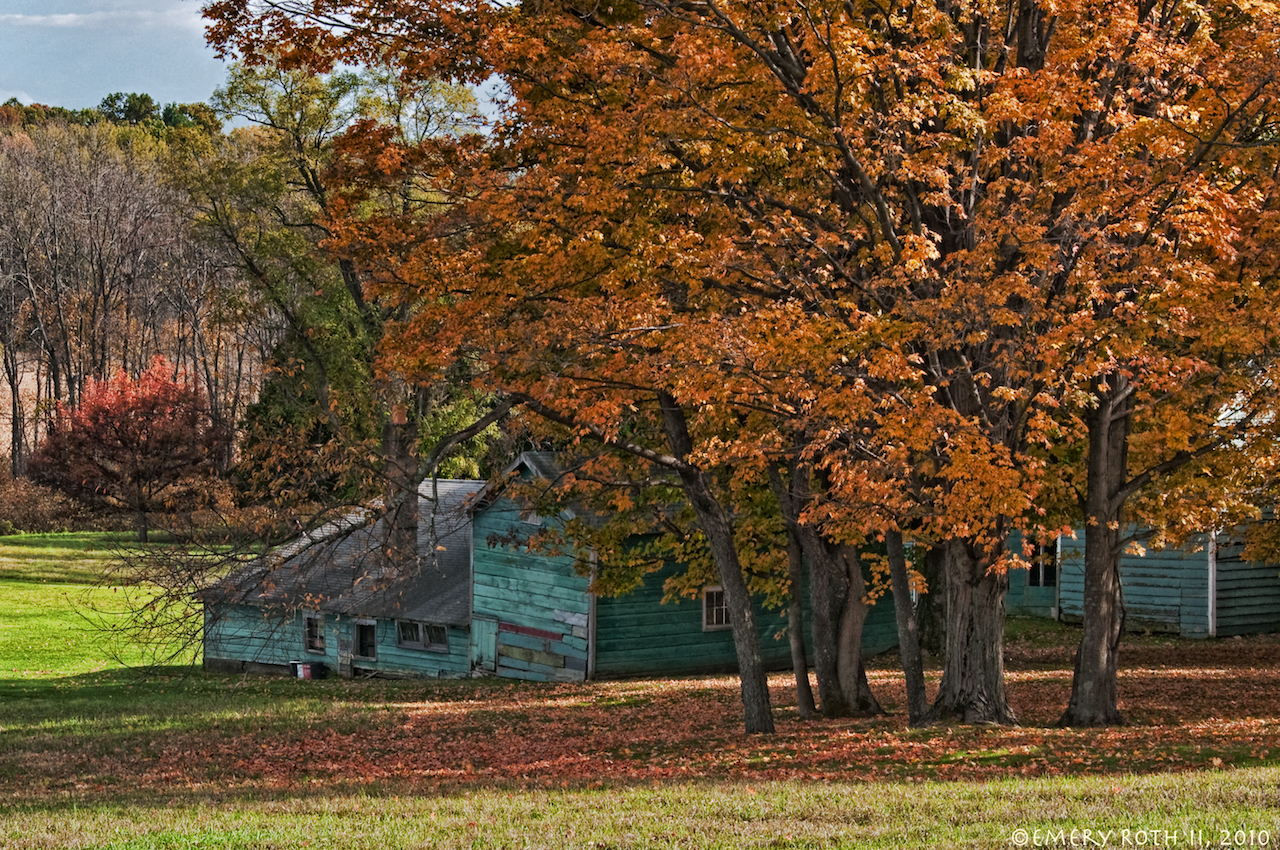
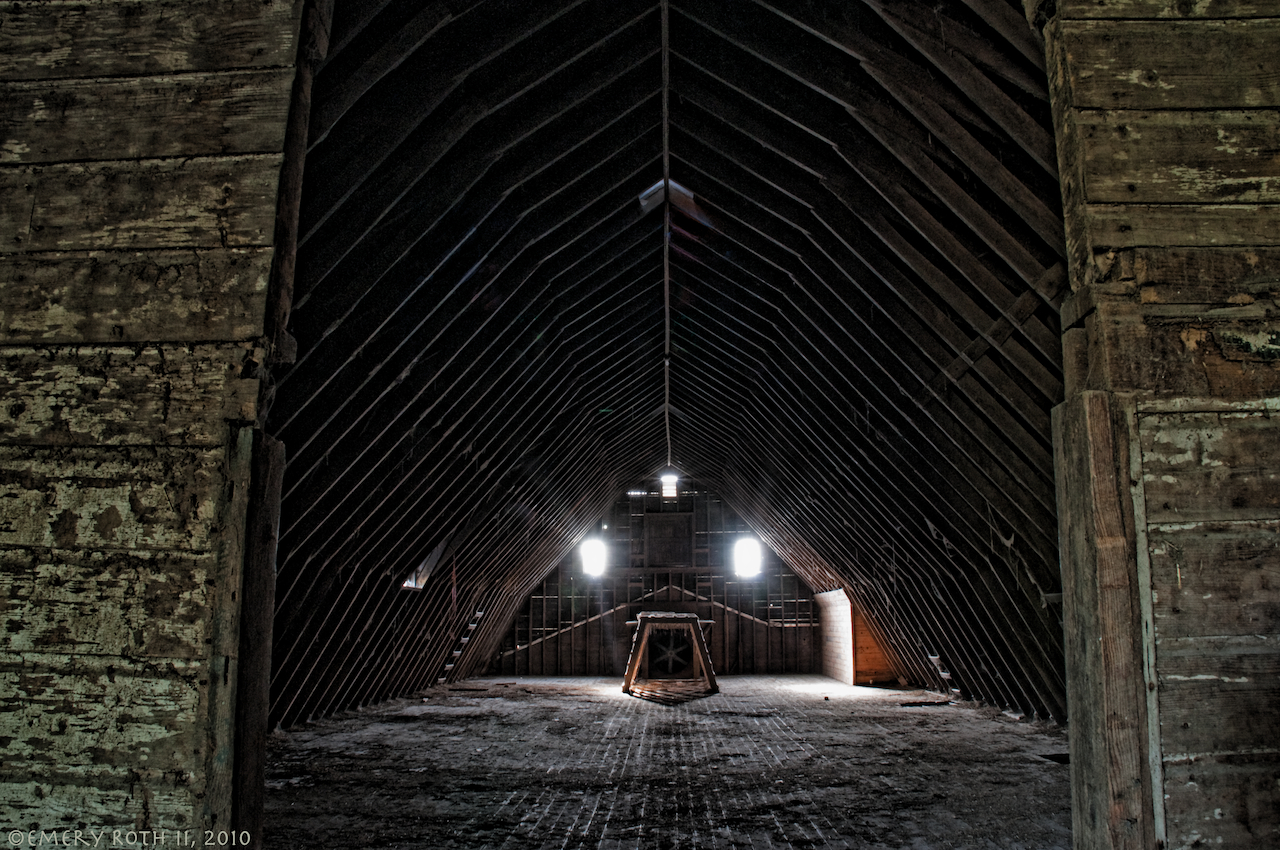
PHOTOGRAPHER'S JOURNAL - This timeline of barns parallels the street but hides its Victorian jewelry and tries to avoid being photographed. I struggled to try to guess initial purposes and ages. When I'm led to photograph a barnstead like this it's hard not to be captivated by the thing, but then I will make nothing but photographic documents. The photograph to be made at Meadow Brook Farm in mid August was a composition of pleasing textures and colors, nothing more and nothing less.

Sunday, January 9, 2011

Convocation at Meadow Brook Farm


JENS JENSEN: "Trees are much like human beings and enjoy each other's company. Only a few love to be alone.."

Friday, January 7, 2011

Waltzing Autumn


BILL VAUGHN: "Suburbia is where the developer bulldozes out the trees, then names the street after them."

PHOTOGRAPHER'S JOURNAL: I made a point of getting back to Red Hook to catch Meadow Brook Farm as the season changed.


A Place to Swing

They resign themselves to slopes beneath and 
slowly embrace the earth. 

They rotate the sky above their heads and 
mark each year with a ring. 

They bend with the wind, change garments with the seasons, and 
strive to reach the sun. 

Beneath their canopies are places to dally,  but 
trees are time's watchmen. 

How many lifetimes have these ancient maples and these old barns been 
dancing here?


Thursday, January 6, 2011

Barn and Welkin


PHOTOGRAPHER'S JOURNAL: The footsteps of the past resonate a bit more loudly at Meadow Brook Farm, though the barns are empty. The Teeter family acquired this land in 1754 and farmed it for nearly 200 years. Even before I learned anything about its history the building felt venerable. The massive timbers that span the central bay come from trees that may have been 200 years old in the 18th century when they were felled to build this. They are big bones, and I felt a business-like sense of purpose about the place. It had been storage for the farm's orchard, and I could imagine that wagons and a crew of men might arrive at any moment and begin unloading crates of apples, the first of the season.

Here is a bit of history that was sent to me by the current owner:

In 2004, internationally-renowned timberman, Jim Kricker and Peter Sinclair, Editor of the Hudson Vernacular Architecture Newsletter visited the farm, identifying and dating the historic structures on the property.   The oldest barn on the farm was originally of Dutch design, (constructed in the early 1700s), one of ten Dutch barns registered in Red Hook. Roman numeral markings, used in pre-revolutionary times, show where structural beams were married.  This barn had bays for housing horses and cows, and a center section for storing a carriage.  At some point the barn was added on to, the roof was raised and it was moved over a full basement to handle the later orchard.

An English side-entrance barn with a two-story carriage house also graces the property along with a stone summer kitchen with a bees-hive oven, (dating back to the 1700s), and an ice house that was later converted into a stable and a workshop.

Up on the hill behind the barns most of the old orchards are gone, and the old workers quarters are in ruins, and further off some of the land has become subdivisions.

The current owner is looking to sell the property to someone who will respect and maintain its historic integrity.  Many thanks to my former college roommate who led me to this ancient farmstead.

Tuesday, January 4, 2011

Tobacco Road


PHOTOGRAPHER'S JOURNAL: Even if one can't identify tobacco plants as they are growing, the long, low, louvered sheds used for drying the leaves are distinctive. The technology used to make Connecticut's fine cigar binders and wrappers has been much the same for 200 years. It is labor intensive, and as we photographed here, crews of laborers showed off the hatchets with which they cut the tobacco stalks. In order to make the best wrappers, for much of the season the plants must be covered by cloth tents which are removed for harvesting.

Native Americans were smoking tobacco when the first settlers arrived from Europe. By the 1630s the settlers were already making a profit exporting tobacco back to Europe. The soil and climate of the Connecticut River Valley proved to be perfect for growing the high quality leaves needed for the binders and wrappers. Tobacco has always been an engine of the river valley economy, and it has served as an entry point for waves of immigrants.

Even though the popularity of cigar smoking has fallen, Connecticut's tobacco industry remains a significant part of the state economy.

Monday, January 3, 2011

Tobacco Curing


PHOTOGRAPHER'S JOURNAL - In the early 1970s I began driving across Connecticut regularly along Interstate 84. Shortly after crossing the Connecticut River heading east, I-84 passed through a vast territory of open flat fields planted with green rows of tobacco beside rows of wooden tobacco sheds where the leaves were cured. My great grandfather was a cigar maker in Hartford at the end of the 19th century, and Connecticut was famous for its tobacco leaves which were used primarily as wrappers for cigars. Back then tobacco was even farmed, though on a smaller scale, in the Northwest Hills where I now live, and you can spot the old tobacco barns by the louvered flap vents that betray their tobacco curing history.

The tobacco fields along I-84 were already disappearing by the mid 1970s, and today the region is filled with strip malls and warehouses for big box stores, and it's probably been almost 100 years since tobacco was farmed in the northwest hills. One can still find tobacco farming, however, along the Connecticut River as one reaches the northern part of the state and passes into Massachusetts. That's where this photograph was taken in late August as the new crop was being harvested and cured.


NOTE: With the previous posting, "Today's Photo" entered its fifth year. This is the 686th photograph to be added to this blog.

Saturday, January 1, 2011

Hay Palace


PHOTOGRAPHER'S JOURNAL - Slowly the old dairy farms fall silent. Many of them then simply fall. Every dairy farmer talks about how hard it is to turn a profit, but as the dairy farms disappear, many find new life as horse farms. From the outside this hay barn looks like the old dairy barns on steroids. Nearby the owner is restoring the old barns, but this new barn dwarfs them.

Cows are always grazing, always processing food in their four stomachs. Horses thrive on a more finely tuned feed, they are choosier, and the horses that will be raised on this new farm have the finest building on the property as their pantry.

Sometimes the things that balance a shot and make it work are deceptively simple. I returned when the hay wagon was moved and more hay had been added on the left, and there was no shot at all.

Wednesday, December 29, 2010

A Rite of Spring


PHOTOGRAPHER'S JOURNAL: What ancient rite of the seasons is conducted here? Is it some cult that will soon fill this space? It is May 30th. Below cows are being milked, but in early spring this hayloft is empty. Soon the first haying will begin.

If the barn has silos, it's a pretty good guess it was at one time a dairy farm, but having silage did not replace the need for large haylofts. Before the time of silos hay got the cows through the winter, but cow's milk was a seasonal delicacy. My correspondent explains the importance of silage and its relation to hay:

In early farming days before silage, hay and dried grain was the sole means of keeping cattle through winter and off months when there was no green grass. The cattle still produced milk but not very much in comparison to cattle in modern times.  Then when silos were conceived of for storage of a "green grass" supplement, to feed during this "off season," milk production surged. Here you had a green forage along with the grain corn all in one.  Hay was still fed as a bulk food source but it was the green silage that really allowed the cows to produce milk in the off season.  During spring, summer and fall of course, cattle pastured day and night except for milking time. Nutritionally rich green forage produces milk.

Cattle were bred to "freshen" in the fall to provide for peak production when milk prices were at their highest. Corn silage from silos simply prolonged the green forage period.  Much later in the farming era, grass silage was started with almost as good results.  There are many reasons why some farmers converted to grass silage while others stuck with corn (soil type, land drainage, equipment, etc.)   Normally it was the goal of each farmer to put up enough silage to last until spring grass.

This farm still remains active, but once there were many more farms nearby. Sheffield Dairy bought milk from the local farmers and an active rail line carried it to New York City where demand for fresh milk was always high. The old rail line still runs near here, but the tracks are gone; now it is only used for bicycling.


JUST TWO MORE DISCOUNT DAYS to take advantage of Blurb's 20% off on either Best of Today's: 2009 or Farm. You'll have to register as a Blurb member, add my book to your cart, and then enter the code, BLURBDISCOUNT, in all caps when asked.

MY BOOKSTORE ON BLURB:  http://www.blurb.com/user/store/erothii

Tuesday, December 28, 2010

Silo Light


PHOTOGRAPHER'S JOURNAL: Much later in the summer (1:17 PM on August 28) my friend Lazlo and I climbed into this abandoned, concrete silo containing nothing but lovely astral light and the sun's beam marking the hours of the day, a holy place. When in use, grain or chopped vegetable material was blown up a pipe running along the outside of the silo, poking through the dome and shown here, top right. By the end of the summer this silo would have been full.

In the previous TODAY'S we climbed a metal Harvestore silo, but the silos pictured in the shot are similar to this one. Harvestores are unloaded mechanically from the bottom, but silos like this were unloaded by hand. One subscriber wrote to me recollecting the process,

You have to remember also that before the days of the automated silo unloaders,  farmers had to climb these things twice a day and fork out silage by hand.  Up and down the slippery rungs of the enclosed chute and ladder.  If you didn't concentrate on every hand and foothold, it was simply a freefall to the cement pad at the bottom.  Its too bad they couldn't have developed a trench silo system first.  But then imagine photos of farms without silos.

The farmer who emptied this silo would have used a silage rake (or silage fork) which looked much like a pitch fork but with probably twelve tines set close together. Whatever the nature of the silo, the purpose was to preserve high quality feed through fermentation. A good silo needed to be close to airtight. Being inside it must have been a heady experience.

Although silos like this one are still commonly seen in farm country, very few are still in use. Harvestore silos which provide a much better seal against air and include mechanical unloading are still used at a few farms, but today most silage is made in trenches and loaded and emptied with tractors.

Sunday, December 26, 2010

Silo View


PHOTOGRAPHER'S JOURNAL: This photograph was shot from the tallest silo in the previous TODAY'S posting. I first saw a photograph similar to this in a book about Hudson Valley farms. When the owner of the farm invited me to climb the silo I knew I'd have to do it even though the thought was a bit frightening. I didn't make my first climb to the top until late August of 2009, without a camera just to see what it was like.

It was hard work. I went cautiously and rested every ten or fifteen feet. I focused closely on each wrung and, as I grasped the next, ignored that it was coated in dried dung from the boots of those who had climbed before me. I could feel my adrenaline pumping as I stepped onto the wire platform at the top. The railing looked flimsy, the wind was blowing, and I was on top of the tallest silo on Winchell Mountain.

The trip down was no easier. On the way up one looks forward, but each step down is taken into faith. The ladder is attached to the side of the silo inside a metal guard rail. Ladder and rail stop ten or fifteen feet above the ground. The remaining gap is crossed by an old, bent, iron ladder that hooks precariously from the bottom of the guard rail and is not anchored at the bottom; with each step it moves. When I reached the ground I took a deep breath and rested.

Half an hour later I made a second climb, this time with camera. I took a series of pictures from the top, but as is often the case, they were preliminary shots.

I returned again this spring. I had learned that the light was best in long shadows of early morning, and in early spring the pattern of corn rows would be crisp. I also knew that twice a day the cows filed from the feeding area to the milking barn and back. A shot might be most interesting if the cows were shuffling one way or the other. I asked what time the morning milkings occurred.

Friday, December 24, 2010

Whiteout on Winchell Mountain


To all my friends who follow the photos and writings on TODAY'S PHOTO, a very happy holiday, and to those who sometimes write with comments, observations, or asides, your periodic communications are especially appreciated. Thank you.

Thursday, December 23, 2010

Invitation to the Underdocks


PHOTOGRAPHER'S JOURNAL: So many times the underdocks have drawn my eye to where reflected pilings open another world, a place of shimmering darkness, passageways, snails, barnacles, ropes and chains that dip and drip beneath the gleaming harbor's surface. Night in the underdocks brings a different world, a place of silent iridescence. Whither this stairway while Bass Harbor sleeps, my last shot before leaving the herring dock?

Wednesday, December 22, 2010


PHOTOGRAPHER'S JOURNAL:


Photographer at Dusk

Out on the wharf the sun was almost gone,
The lobster boats were flat, no window fire,
The wordless earth was turning into stone,
And farther out one anchored sailboat waited
To catch the wind wrinkling another day.
Moods flicker and pass,
I reached to catch it
Even as it washed out to sea.

Tuesday, December 21, 2010

Herring Warehouses, No.7


PHOTOGRAPHER'S JOURNAL: I reached the main shed of the complex as the sun was setting. Had it been a perfect shooting night? I guessed so, but my calling had been inside. Outside the low light caught the windows of lobster boats anchored for the night, and across Bass Harbor the town of Bernard was already in shadow. From the end of the wharf (in front of me here) most of my shots would be into the bright sun, challenging if not impossible to shoot, but the truth was I was almost done here, and the challenge of the light was appealing.


P.S. It's not too late to take advantage of Blurb's 20% discount on either Best of Today's: 2009 or Farm. You'll have to register as a Blurb member, add my book to your cart, and then enter the code, BLURBDISCOUNT, in all caps when asked.

MY BOOKSTORE ON BLURB:  http://www.blurb.com/user/store/erothii

Monday, December 20, 2010

Herring Warehouses, No.6


PHOTOGRAPHER'S JOURNAL: What is it that lures me into this labyrinthine network of shacks? What makes it a fit subject for photography? Can a single photo tell the story, or does the story consist of the journey and the sensations it initiates and moments of feeling lost in an alien world? In order for me to have lobster on my plate in Connecticut, such places in Maine must exist - so many dark passages, so many rooms constantly being resupplied with herring, so many barrels and drums and a sea of salted herring waiting to be cut and stuffed in bait pockets to lure voracious crustaceans from hiding.

Traditions of coastal life live here and have flowed along these currents for 200 years, and the men who work here today are of the same families. It seems an odd discord, this world bumping against a culture that has grown transient, even i-Mobile, maybe rootless absent-minded with regard to the life of the planet. It is not only vacationers. Lobstermen with pickups and lobster boats, and now sometimes email and web sites, linger on Facebook, tweet and continuing the work of their grandparents, managing their resources. Or is the odd thing how rare the generational continuity has become elsewhere?

For many years I shot on the docks in Bass Harbor, barely looking inside the odd collection of shacks. Before I began working with HDR there was no point. I don't shoot with artificial light, and what interests me are the lurking shadows of this time-haunted place that is still part of yesterday and fits oddly with tomorrow.

Saturday, December 18, 2010

Herring Warehouses, No.5


PHOTOGRAPHER'S JOURNAL:


Shadow Dance

I retreat further in.

Passages turn
intersect,
hop
building to building.
Each breach
is a fissure of slime
where one hears the tidewater's
angry slap,
and things of the underdock
and their tidal minions
rise and creep,
scamper and leap,
noiselessly rock
in furtive contemplations.

Friday, December 17, 2010

Herring Warehouses, No.4


PHOTOGRAPHER'S JOURNAL:


Submerged

Vats of herring
deep in salt
swell and bubble,
foam and flow.
Herring in shoals
dart, shining
through my inner ear
coil round my spine,
realities dark dream,
'til the weir breaks,
and flickering herring swirl
toward the outer harbor
engulfing me in brine.

Thursday, December 16, 2010

Herring Warehouses, No.3


PHOTOGRAPHER'S JOURNAL:

Assaulted Herring


Miasma of fetid herring
defiles darkness,
walls I dare not touch,
and the slimy air I try to breathe,
lobsters' ambrosial temptation,
for me smothering vertigo.

Wednesday, December 15, 2010

Herring Warehouses, No.2


VIEWING NOTE: Images such as this are best viewed against a very dark or black screen background. If you can't see detail in the very first floor board at the bottom of the screen, then you're not seeing all of the detail that is in the image.

PHOTOGRAPHER'S JOURNAL:

Herring Shack Passage

To anyone else, a noxious place,
to the grunge-seeking photographer,
an arcade of mysteries.
Who shares my noisome shadows?
From what corners do their red eyes shine?
I advance into dim light, and
the passage swells to a gallery.

Cracks and breaches
illuminate raw wood,
the aroma ripens,
panels scratched and bespattered are lit and ready to be deciphered.
What sculptured idols does each new gallery hold?
What incantations scar the ancient wood?
What dark magic might not thrive here?


NOTE: Once again ONE New England is featuring one of my photos on the front cover.  This is a great online mag for those interested in what's what around New England.  http://www.onenewengland.com/


BOOK DISCOUNT:
If you've been considering ordering one of my books, now is a good time to do it. Order before December 31, and Blurb will give a 20% discount off the book's cost.  You'll have to register as a Blurb member, add my book to your cart, and then enter the code, BLURBDISCOUNT, in all caps when asked.  Remember, the discount expires at the end of the year.  Use the links below to view and order.


MY BOOKSTORE ON BLURB:  http://www.blurb.com/user/store/erothii

Tuesday, December 14, 2010

Herring Warehouses, No.1


PHOTOGRAPHER'S JOURNAL: The herring warehouses in Bass Harbor, where lobstermen store their bait, are a huddle of old sheds, shoulder to shoulder, sitting atop piers and leaning far out into the harbor. One may wind ones way in the open air among lobster traps out to the end of the wharf. Enter one of the passageways leading into the buildings, and be prepared to be assaulted by darkness and the stench of salted herring. It takes a few moments to adjust to the dim light in the long, narrow passage, and I walk slowly until I reach a junction where rooms and other dark passages diverge.


BOOK DISCOUNT:
If you've been considering ordering one of my books, now is a good time to do it. Order before December 31, and Blurb will give a 20% discount off the book's cost.  You'll have to register as a Blurb member, add my book to your cart, and then enter the code, BLURBDISCOUNT, in all caps when asked.  Remember, the discount expires at the end of the year.  Use the links below to view and order.


MY BOOKSTORE ON BLURB:  http://www.blurb.com/user/store/erothii

Monday, December 13, 2010

Des Wanderers Weg


PHOTOGRAPHER'S JOURNAL: High above the reflecting pond in Ancramdale where the previous image was taken, this trail entices the wanderer. I followed not knowing how far it stretched or where it led but only that it might promise discovery or adventure at any bend. In the still, warm air of autumn there is no hint of a break, and the wanderer expects infinite continuity. Schubert might have followed such a path. I can almost hear his song.


STILL TIME FOR BOOK DISCOUNT:  If you've been considering ordering one of my books, now is a good time to do it. Order before December 31, and Blurb will give a 20% discount off the book's cost.  You'll have to register as a Blurb member, add my book to your cart, and then enter the code, BLURBDISCOUNT, in all caps when asked.  Remember, the discount expires at the end of the year.  Use the links below to view and order.

Saturday, December 11, 2010

Autumn Respite


PHOTOGRAPHER'S JOURNAL: I believe in wandering. I believe it is the way of all life from its origins in DNA which never seeks perfection but only change, sending off sports to try new ways. Often we wander great distances, become comfortable along the way, but occasionally our wandering leads to a great divide. We pause at the crossing, a great river or chasm or a precipitous range of mountains or an age of deep freeze, and we have no idea how to get across or what we will find on the other side.

This moment of pause before picking up my camera again is a good moment to rest in the calm of the recent autumn and in some of the places my path has taken me over the past few months. This quiet pond, the same pond in which I found Harlequin Autumn, provides an apt moment for reflection.

NOTE: I'd like to call readers' attention to the online magazine One New England, which has again featured one of my photographs.

BOOK DISCOUNT IN TIME FOR THE HOLIDAYS: If you've been considering ordering one of my books, now is a good time to do it.Order before December 31, and Blurb will give a 20% discount off the book's cost. You'll have to register as a Blurb member, add my book to your cart, and then enter the code, BLURBDISCOUNT, in all caps when asked.

BLURB BOOKLINKS:
"Best of TODAY'S," regular format: http://www.blurb.com/books/1169668
"Best of TODAY'S," large format: http://www.blurb.com/books/1169042
"Farm," regular format: http://www.blurb.com/books/1524641
"Farm," large format: http://www.blurb.com/books/1524592

Thursday, November 11, 2010

Bacchantes Autumnales


JOHN KEATS: "Heard melodies are sweet, but those unheard / Are sweeter..."

Wednesday, November 10, 2010

Bacchantes Liberati


PHOTOGRAPHER'S JOURNAL: While walking in a wooded valley in Sharon, Connecticut last week I met these bacchants - sylvan apparitions orbiting human imagination.

Tuesday, November 9, 2010

Beside the Housatonic River, Autumn, 2010, No. 2


PHOTOGRAPHER'S JOURNAL: As silos to dairy farms, so chimneys and towers to industrial mills. They make the horizontal world vertical; they offer the photographer opportunities and dilemmas. This tower, which is topped by a rusting tank, probably stored water pumped from the river for use in the mills.

Given certain conditions, it is clear that the inanimate, dead world strives with amazing determination and dexterity toward perception and differentiation. The most primitive cells say "I am," seek sentience to turn toward the light, and strive to distinguish between that which they can eat and that which will eat them. As hawks search for their prey, rivers seek the ocean, the sun holds the planets aloft, and yellowing vines cling to an ancient scaffold to reach the sun. Are they all animated by the same current? Where is its source, or is such a question paradoxical? Are the forms perceived its finite, corporeal shape, and are they intuited through sensing and perceiving organs that are also of its making? At least that's been my contemplation from here in the cave of my Cartesian heritage.

The old factory is quiet, the water tower above the river, empty. Here the leaves flare before the coming chill. This weekend the oaks, last holdouts, dropped their leaves, and now the chill is off the ocean blowing from the east and north, and on Monday everything was covered with ice.

Thursday, November 4, 2010

Reverie

PHOTOGRAPHER'S JOURNAL: Is the drowsy half sleep of becoming a premonition of the drowsy decay of going? Is that why these rising, spring lily pads look so like their decaying selves now settling back to pond bottom? On one side we celebrate the star-shaped, gleaming lily flowers and on the other, dread the star-like, mute infinitude.

Wednesday, November 3, 2010

Heat


PHOTOGRAPHER'S JOURNAL:


Transmogrification

Once they've felt the force,
the turning and grinding,
the hum
they say
stays in the castings,
reverberating through
shafts and pullies
down to the
last
punch.

Tuesday, November 2, 2010

Joker Ball


PHOTOGRAPHER'S JOURNAL, "Station Break": On Sunday I traveled with a friend to NYC where we met two other friends for the annual Greenwich Village, Halloween Parade, and so the processing of Halloween images must now compete with the processing of autumn images which has been competing for the past weeks with the taking of autumn images. As always, this means the images posted to TODAY'S are not the most current. I like to post in sets and try to place images in a somewhat ordered context, but the set of Maine images were interrupted when the factory images began, and the factory images soon became staggered as I inserted fall images which seemed to comment on them, and now all has halted as I try to make the most of autumn shooting.

In any case, this image was not taken at the celebrations in Greenwich Village but in the same antique store in Maine where I found the Sea Captain's Wife. The posting of Halloween parade images will most likely appear in the context of New Year's Eve or maybe May Day.

Images from the 2008 Halloween Parade can be found by scrolling back to November of 2008.

Tuesday, October 26, 2010

Roots


PHOTOGRAPHER'S JOURNAL:

The river still flows by,
though the concrete millrace is cracked and stagnant.
When is the first frost?

Sunday, October 24, 2010

Harlequin Autumn


PHOTOGRAPHER'S JOURNAL: The seasons wash away like garish laundry while we grow thin and sere waiting for rain.

Friday, October 22, 2010

Tiffany Mill Windows (fixed)


PHOTOGRAPHER'S JOURNAL: Why am I sending out the same image twice? I learned early on that for me routines are essential. I had parked along a ridge where the sun was going to set. It was spring and the trees were budding and blossoming. There were wonderful pictures to be had. Normally I hang by camera backpack on my tripod as I work. It serves as a convenient "desk" as well as a ballast. This time I wanted to move the tripod to lots of different locations quickly, and I set the bag against a tree. An hour or so later and several miles down the road I went to change lenses and realized that my bag with the lenses was... well, at the moment I wasn't sure. It was getting dark. I had driven between three locations.

Whether it is always putting a filled memory card or empty battery into my left pocket (empty cards and full batteries always go in the right), the particular steps I always take when exchanging lenses, or how I always hang my camera backpack on my tripod when I stop and shoot, violating those routines is a prescription for trouble. After ten minutes of heart-sinking panic I found my camera backpack propped against the tree when I rushed to take pictures at the first stop.

A note from a friend today praised yesterday's version of "Tiffany Mill Windows" but suggested that it appeared a bit dark. Again my heart sunk as I recalled that I had increased my monitor brightness some time ago and had for the past week or so been over-darkening images to compensate. I especially appreciate those who write to ask about a possible problem.

The over-darkening is most severe on images like this with important shadow areas. The effect is even more damaging on the previous TODAY'S image. I will slowly revise the recent images on this blog site. My apologies for violating my careful routines. Let this be a(nother) lesson to me.

Wednesday, October 20, 2010

Tiffany Mill Windows


PHOTOGRAPHER'S JOURNAL: The husk, the shell, the casing shucked at birth, or brittle, chalky bones? Sometimes it's hard to be sure, and the old walls are mute.

NOTE: All of these mill images look best when seen against a dark background. Here are a few earlier images inspired by the style of Louis Comfort Tiffany: Pond Tiffany, Tiffany Autumn. It seems autumn is Tiffany time.

Tuesday, October 19, 2010

Beside the Housatonic River, Autumn, 2010


PHOTOGRAPHER'S JOURNAL: They told me that time moves along a line, like a train on a railroad track vanishing into a dark, windy tunnel, but when I looked I saw it falling in layers, settling like old leaves and hickory nuts, the stones of Rome lying all about us.

Sunday, October 17, 2010

Unboarded


PHOTOGRAPHER'S JOURNAL: Leaves have turned earlier this year than I ever remember. Trees along the road were yellow well before October 5th, the marker I set on the year my daughter was born to measure future leaf change. There were few reds until a week ago, and color has survived the recent rains.

Autumn is a fit backdrop for this forgotten mill town where few trains pass, and it feels right that on several shoots here I have had to keep my camera sheltered under my "Rothcloth," (a photographic invention of mine that has been "manufactured" by Jane) while frequently wiping raindrops from the lens.

Many of the old mill buildings here are colossal ruins. A few still rent office space to small businesses. Some storefronts in town are for rent, others suggest another age. Friends tell me it's all a symptom of post-industrial society, and I wonder what "post-industrial society," might be. Is there such a thing?

I've been shooting here while processing photos of Maine fishing harbors, both remnants, some would say relics, of industrial America?

Thursday, October 14, 2010

The Sea-Captain's Wife


PHOTOGRAPHER'S JOURNAL: What can we know of the sea captain's wife who I met in one of those uniquely Maine, second-hand outposts of homeless stuff? She could have lived looking out to sea in a captain's house like the ones I pass in Belfast and Camden, and Searsport with their ship-shape carpentry and their widow's walks, all B&Bs today.

Tuesday, October 12, 2010

Web Catch


PHOTOGRAPHER'S JOURNAL: Thurston's lobster pound in Bernard is a great place to eat the freshest lobster available, and the wharves at Thurston's are one of my favorite spots to catch photos of the lobster industry. When we were there just after Labor Day the wharves were beginning to fill with traps. I've been there in early spring, at the beginning of the season when only a labyrinth of narrow passages, littered with buoys and gear winds mysteriously around each wharf between walls of piled up traps.

On the second day of our trip we caught our first sunrise in Southwest Harbor, then picked up coffee and were on Thurston's wharves in Bernard just after the sun topped the hills across Bass Harbor. I didn't know what I wanted to shoot when the low sun beamed down a row of traps. It caught the webbing of these three that stood out of alignment.

Around the corner I found another web that I thought worth photographing. A spider the size of a half dollar had built an enormous web in the sun among the traps. Photographer's are mostly scavengers, ragpickers. We wander and observe and find our prey where we can, not at all like lobstermen or spiders.

Monday, October 11, 2010

Dirty Jobs


PHOTOGRAPHER'S JOURNAL: Lobsterman can use up two of these tubs in a day. The herring are heavily salted and stored in warehouses by the shore. Aboard the boat they will be stuffed into fist-sized, mesh, bait "pockets" to refresh the traps as they are pulled. The old bait pocket must be retrieved, emptied, reused. Definitely a dirty job.

Thursday, October 7, 2010

Lobsterman's Commute


PHOTOGRAPHER'S JOURNAL: Every job has its rhythm. For the lobsterman day begins paddling or motoring to his lobster boat which he has moored in the center of the harbor. Watch them any morning at the loading docks around Bass Harbor, taking turns to pull alongside one of the wharves by a winch. They stop on the dock and chat and drink coffee. While the captain gets the boat, the mate may get the bait and get it ready to be lowered to the deck. Perhaps new traps are to be set that day. They must be loaded too, or pulled traps from the day before may have to be unloaded. Well before most people are having their first coffee, pickups have formed a quiet row, red, blue and silver beside the common wharf in Bernard. The lobstermen are at sea.

Last year I photographed a day aboard The Dillon Chris and Linda with Captain Howard and Mate Roger, and I made a slide show of the photos. To view the slide show click: SLIDE SHOW.

Wednesday, October 6, 2010

Composition with Herring


GUEST JOURNAL by JANE ROTH:
Sardine Dilemmas

Skinless, boneless, packed in oil?
A key?
Twist or pry?

Who invented this?

Ribbon of metal?
A cut?
bleed or starve?

What kind of cracker?

Tuesday, October 5, 2010

Gulled


PHOTOGRAPHER'S JOURNAL - Herring is the preferred bait of the lobstermen. Warehouses and sheds packed with salted herring make the gull's contest for pecking order especially aggressive here. Watch them for awhile and see if you can spot top bird. These are not the obsequious gulls who beg at the pull-offs on the road to the top of Cadillac Mountain, hoping with their doorman-like deference to claim a bit of your lunch. Around the harbor, we're in the big league.

Monday, October 4, 2010

Graduation


PHOTOGRAPHER'S JOURNAL:

Lobster Bait

We are well-schooled.
We stay close,
move with our neighbors,
keep our distance,
align polarity,
swim only with those of our color and size,
diving - a flash.

Slipstreaming in a hydro peloton,
we hardly know who leads,
sifting krill,
upwelling with a plankton coriolis,
quivering with wild energy.
a whirling galaxy,
devouring mind incarnate.

Saturday, October 2, 2010

Lobsterman's Shack


PHOTOGRAPHER'S JOURNAL:


Salt Cod Soul


How old is that fish smell that stains the boards of your old shack,
that salts itself on your forehead, stings your eyes
and swims in your blood? Was it pickled in wood traps
drying in the sun with their sea urchin freight
and their rotting crabs? They were always breaking, and you
were never without spare lath and a hammer and nail.

Was it there before haulers drew the warp
swiftly through your glove, back when you
hauled by hand from a dory at the harbor's edge
and sold three pound lobsters to the canneries - and later
when they filled three pound cans with half-pound bugs?
And was it the same when all the canneries closed?

Is the taste the same as sailing with seiners
on silken schooners beside the mackerel shoal,
till you spring at once to the seine boat, stealthily
circle the shoal, then draw the purse string shut -
fifty barrels of mackerel at a time,
though you ate dried cod and pickles for a month?

And on your way home with a bushel of salted herring
bungied in the back of your black, Dodge Ram
for another day at sea... what sweet smell
mingles with your wake and fills forgotten dreams.
settles like the smoke from your old wood stove
and rings in your ear like the call of the running tide?

Thursday, September 30, 2010

Low Tide


DAVID L. LUNT (from Hauling by Hand, by Dean Lawrence Lunt): "I started when I was 10 (1948) with just a few traps around the harbor. The first year I had a rowboat and the next year I had a little, aircooled Lawson outboard that I put on it. I started out with maybe 25 traps right around the harbor. We used to go around the shore and pick up traps that people didn't want to bother with and patch those up. We also had some traps that the bigger fishermen didn't want and had discarded. We would patch those up too. The traps were good enough to fish inside and for us to haul by hand, but they weren't good enough to haul in boats. They wouldn't hold up. We also picked up old buoys and stuff around the shore. We used rope people had discarded and couldn't haul with the winch heads anymore. That is just about what everyone started out with - everyone my age."

PHOTOGRAPHER'S JOURNAL: Corea with its shoreline of docks may be the most traditional looking of New England fishing towns, but few lobstermen care much about making it look authentic. It just is.

Low tide, a time one doesn't want to arrive at the dock with a truckload of fresh bait. Tides were most extreme when we were in Corea, high highs and low lows, and seeing the docks stranded like this makes clear how much lobstermen move by the tides. I had high rubber boots with me which I carry for wading into the mud, but I forgot to use them here. There are pictures to be made from under these docks.

Many of the docks have classic fishing shacks whose use, nature and contents, until this trip, have remained a mystery to me.

Wednesday, September 29, 2010

September Song


DEAN LAWRENCE LUNT (from Hauling by Hand): "Yet another chore was making and mending trap 'heads' and bait pockets. Heads are the mesh netting made of twine that are stretched across the ends of traps and form the entrance to a trap on the side. Inside each trap, a mesh, funnel-shaped netting allows the lobster to move from the compartment with the bait to a second compartment called a "parlor." It is in the parlor that the lobster is trapped.... A common sight in island homes during the first 75 years of the 20th century was a man or woman sitting in the kitchen with a string attached to the kitchen doorknob, pulling wooden needles and cotton twine around a 'mesh board' --- a wooden block similar in shape to a harmonica --- to makes heads or pockets. Islanders sometimes held knitting bees at which eight or 10 people might gather at a house for ice cream and cake and to knit heads."

PHOTOGRAPHER'S JOURNAL: This image is from mid-September. The lobsters are in retreat to deeper, warmer waters, and lobstermen are pulling back their traps; nearest to shore come in first. Each wharf is filling with them and buoys, toggles and ropes. The lobstermen have spent their summer as I've heard them say, "Trying to outthink the lobsters." The hunt is learned from early childhood, passed from father to son and now sometimes to daughters too. I see stove pipes on many of the lobster shacks, so there is a winter routine as well. If I return in the spring I know I will see rows of scrubbed traps with ropes, buoys, and toggles neatly packaged inside in readiness for the lobsters' return.