
PHOTOGRAPHER'S JOURNAL:
Moment
Peepers and grippers,creepers and crawlers,overtakers and undertakers.
Moment
Peepers and grippers,creepers and crawlers,overtakers and undertakers.


Scents of the Past
tacked to piquant chestnutThree photographsrecall a partylong since over.
In an apple crate,hand-lettered decorationsname the forgotten eventand the date.
Then It smelledof loud music,hot casserole,sweet sweat dabbed discreetly.
Before, for two hundred yearsno party could dislodgethe perfume of ripe applesand ripe sweat.
And earlier still, a prehistoryof forgotten talesand tailsand their particular aromas.
Edgily hollow,restively quiet,a great space eagerto move beyond apples.


A Place to Swing
They resign themselves to slopes beneath andslowly embrace the earth.
They rotate the sky above their heads andmark each year with a ring.
They bend with the wind, change garments with the seasons, andstrive to reach the sun.
Beneath their canopies are places to dally, buttrees are time's watchmen.
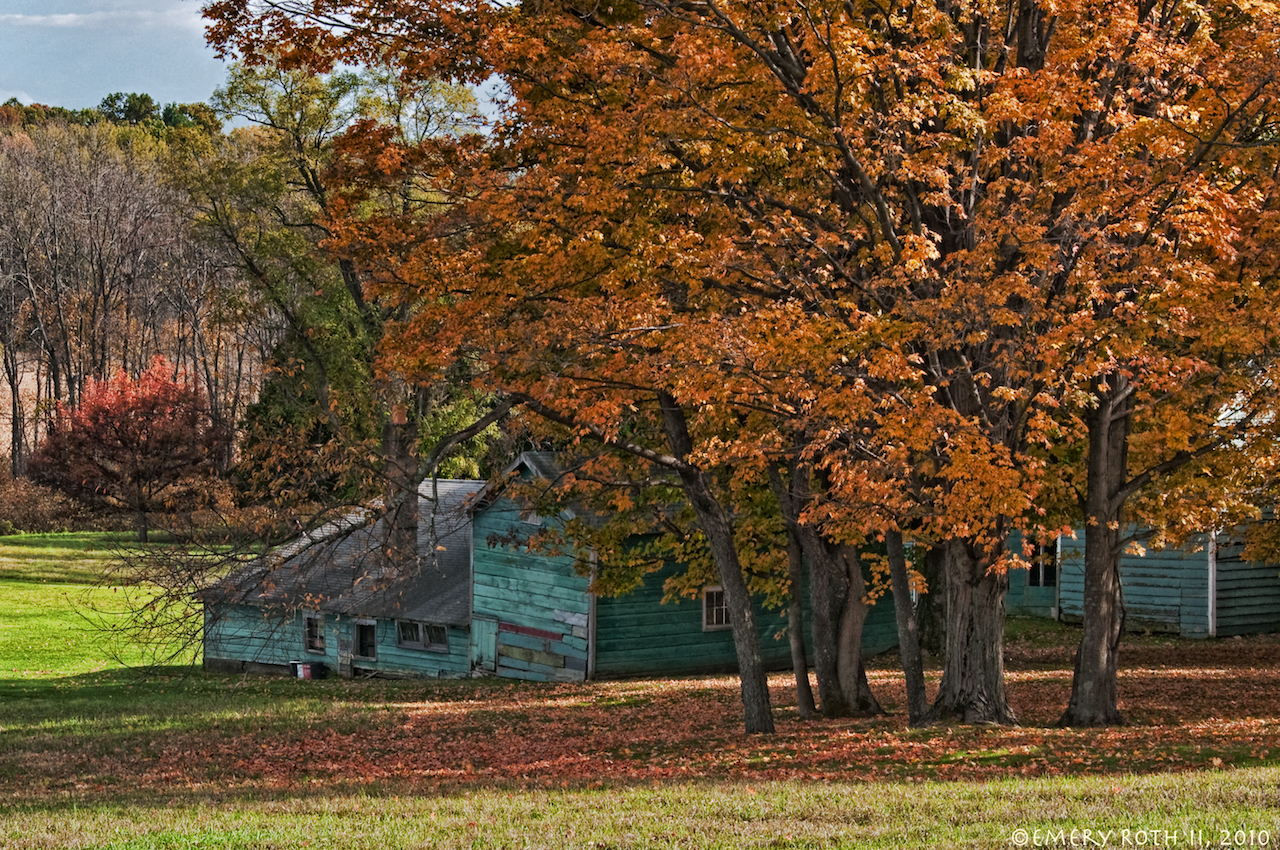
How many lifetimes have these ancient maples and these old barns beendancing here?

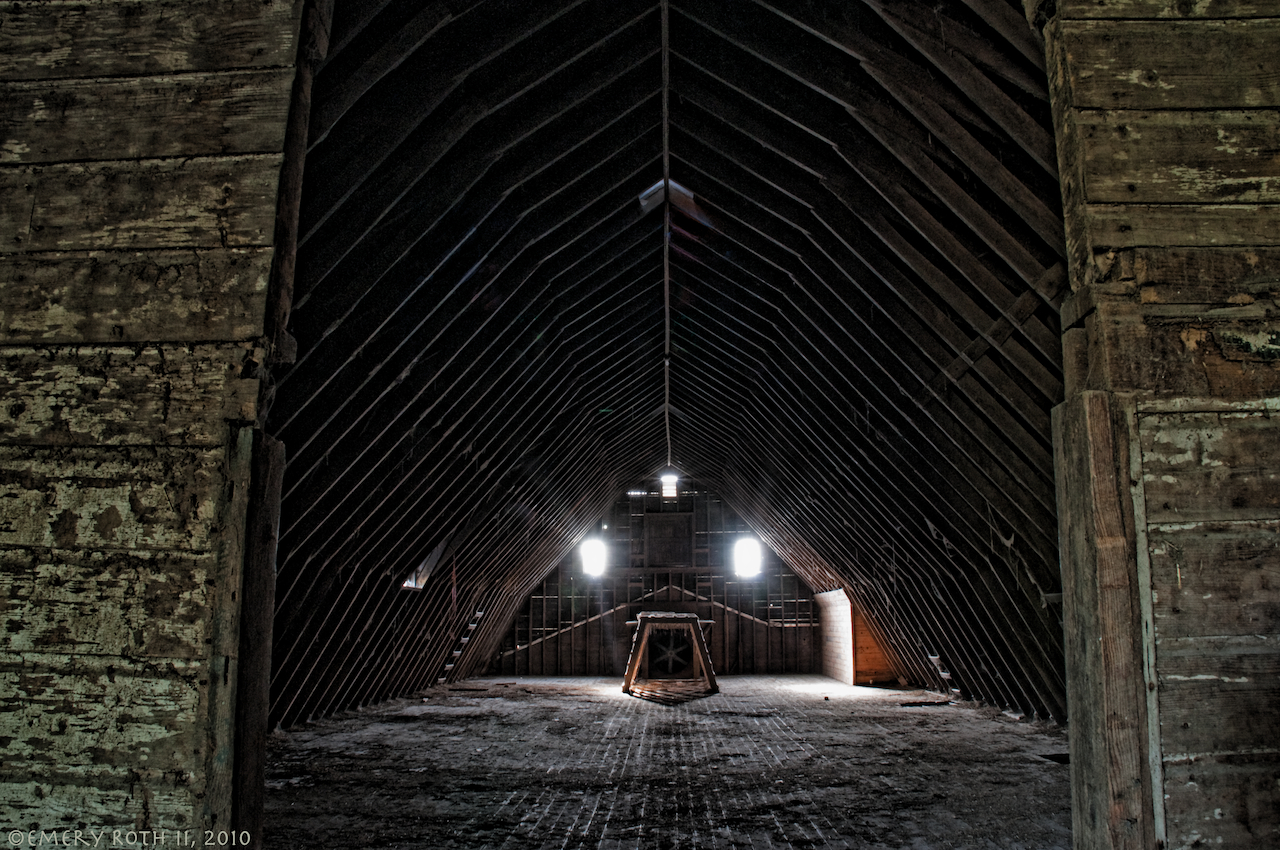
In 2004, internationally-renowned timberman, Jim Kricker and Peter Sinclair, Editor of the Hudson Vernacular Architecture Newsletter visited the farm, identifying and dating the historic structures on the property. The oldest barn on the farm was originally of Dutch design, (constructed in the early 1700s), one of ten Dutch barns registered in Red Hook. Roman numeral markings, used in pre-revolutionary times, show where structural beams were married. This barn had bays for housing horses and cows, and a center section for storing a carriage. At some point the barn was added on to, the roof was raised and it was moved over a full basement to handle the later orchard.
An English side-entrance barn with a two-story carriage house also graces the property along with a stone summer kitchen with a bees-hive oven, (dating back to the 1700s), and an ice house that was later converted into a stable and a workshop.
Up on the hill behind the barns most of the old orchards are gone, and the old workers quarters are in ruins, and further off some of the land has become subdivisions.


In early farming days before silage, hay and dried grain was the sole means of keeping cattle through winter and off months when there was no green grass. The cattle still produced milk but not very much in comparison to cattle in modern times. Then when silos were conceived of for storage of a "green grass" supplement, to feed during this "off season," milk production surged. Here you had a green forage along with the grain corn all in one. Hay was still fed as a bulk food source but it was the green silage that really allowed the cows to produce milk in the off season. During spring, summer and fall of course, cattle pastured day and night except for milking time. Nutritionally rich green forage produces milk.
Cattle were bred to "freshen" in the fall to provide for peak production when milk prices were at their highest. Corn silage from silos simply prolonged the green forage period. Much later in the farming era, grass silage was started with almost as good results. There are many reasons why some farmers converted to grass silage while others stuck with corn (soil type, land drainage, equipment, etc.) Normally it was the goal of each farmer to put up enough silage to last until spring grass.

You have to remember also that before the days of the automated silo unloaders, farmers had to climb these things twice a day and fork out silage by hand. Up and down the slippery rungs of the enclosed chute and ladder. If you didn't concentrate on every hand and foothold, it was simply a freefall to the cement pad at the bottom. Its too bad they couldn't have developed a trench silo system first. But then imagine photos of farms without silos.


